“Untreated stenosis” sounds like a countdown. The phrase suggests a narrow canal that will keep tightening, and a person who is late. The course described in follow-up series does not look like that countdown.
Some people improve, about half stay about the same, and a smaller share worsen, over periods that are not one shared finish line. None of those shares is assigned to you in advance.
Lumbar spinal stenosis is narrowing of the space that holds the spinal cord and the nerves, which can squeeze them. Living with it means living with symptoms that match that squeeze, not with a word on a scan. What you do, or do not do, about the symptoms is a separate decision. This page is about the shape of the course, and about when watching stops being a full plan. It does not promise that waiting is safe for you, and it does not promise that waiting is unsafe.
Untreated has to mean the syndrome
A narrow canal on a picture is common, and it often produces no symptoms. In a Framingham imaging study, narrowing was common and often had no symptoms. A person in that situation has an imaging finding, not a syndrome left untreated. A scan without a matching story is not the condition this page is about.
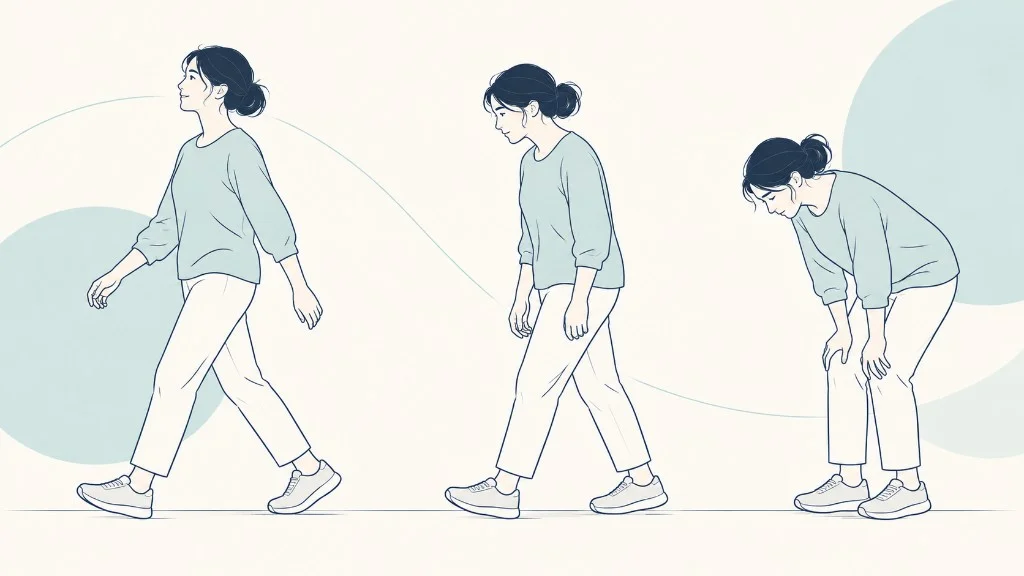
The condition is a history first. A 2022 review in JAMA describes clinical lumbar stenosis as back and leg pain provoked by extension and relieved by flexion, then confirmed with imaging. Extension is standing or walking upright.
Flexion is bending forward. Someone who walks without a limit, and whose report says the canal is tight, has the second half of that sentence without the first. Someone who must sit to reset heavy legs, and whose scan matches, has both halves. Only the second person is living with the syndrome.
AAOS OrthoInfo fills in what that life can include, and what it can leave out. People may or may not have back pain. Pressure on the nerves can cause burning pain, numbness, or tingling in the buttocks or legs, called sciatica.
Weakness, or a foot that slaps, can occur when the pressure is greater. Not everyone has weakness. People often feel better leaning forward or sitting.
Standing straight or walking usually makes the pain worse. Some can ride a stationary bike or walk while leaning on a shopping cart. Walking more than one or two blocks may bring on severe sciatica or weakness. That block picture is a description of a limit, not a grade of how untreated you are.
How far the limit goes, and why the number is not a score, is the subject of Walking Distance and Lumbar Spinal Stenosis: A Limit, Not a Grade. Use the distance as a diary if it helps you see change. Do not use it as a rank.
The word untreated also gets used for “I have not had surgery.” That is a third meaning. People in that group may be using physical therapy, activity changes, or other care their clinician directs.
Natural history series are descriptions of course over time. They are not a pure record of people who received nothing. This page will not pretend the figures are a reward for avoiding care, or a penalty for using it.
What nonsurgical care can and cannot change, as a comparison with surgery, is covered in Can Lumbar Spinal Stenosis Get Better Without Surgery?. The question here is how to live with a course that has more than one shape.
The course is not one slope
In natural history series reviewed in the JAMA paper, over periods of up to three years, roughly a third of people improved, about half stayed about the same, and roughly 10 to 20 percent worsened. These are group findings, not a personal forecast. The window is “up to three years,” not one shared endpoint.
Some series in that review were shorter. The phrase does not mean everyone was checked on the same day three years later, and it does not mean the result at month six is the result at the end.
The shape of those figures argues with two casual stories. One story says a narrow canal is already a steady decline, so the only honest plan is to expect to be worse. The series did not show that.
About half stayed about the same, and roughly a third improved. The other story says the problem fades if you wait, so concern is wasted. The series did not show that either.
Roughly 10 to 20 percent worsened. Both misreadings come from lifting one share and dropping the others. A better month is not proof you are in the improving third. A worse month is not proof you are in the group that worsened.
Improvement in those series is a change in how people were doing, not a statement that the canal widened. Worsening is not a schedule you can see coming because a certain number of months has passed. That missing schedule is why this page cannot tell you that waiting is safe or unsafe. Safety for a given person is an examination.
Natural history
Three group findings, and none of them is yours yet
Over periods of up to three years, not at one shared finish line.
What the series showed
- Roughly a third of people improved.
- About half stayed about the same.
- Roughly 10 to 20 percent worsened.
- The periods ran up to three years, not to one date.
What they cannot assign
- Which share you will land in.
- A promise that waiting is safe for you.
- A promise that waiting is unsafe for you.
- Proof that the canal opened or tightened on a clock.
Group findings are not a personal forecast.
Feeling better does not mean the canal opened
AAOS states the anatomical limit directly. Nonsurgical care does not improve the narrowing, but many people report symptom relief. The relief is real as a report.
It is not a remodeling of the bone and ligament that crowd the nerves. If you feel better while the canal stays tight, you have not misunderstood your week. You have met the split the page describes.
Leaning forward can increase the space for the nerves while you hold that posture. That is why a cart, a walker, or a stationary bike can make a day workable. The space change is positional.
When you stand straight, the advantage of the lean is gone. People sometimes describe this as the spine “opening up” on a good day. The more precise account is that symptoms changed, or that flexion helped while it lasted. The canal’s bony shape is still the one imaging would show.
Back pain is an unreliable score of the course. AAOS says people with stenosis may or may not have it, depending on the arthritis that has developed. Arthritis here means wear in the joints and discs.
A quieter back with the same leg limit is not improvement in the syndrome. Heavier legs with a calm back are not a back that “fixed itself.” Track the legs, the walking limit, and strength. Let back pain be its own line if it is present, and do not invent it if it is not.
Weakness is the line that should not be averaged into “a bit worse.” A foot that slaps, or a leg that will not hold you, is what AAOS describes when pressure is greater. Not everyone has it.
If it is new, it is not just a shorter version of last year’s walk. If it is absent, say so, so a familiar heaviness is not later remembered as weakness. The natural history figures include people who worsened and people who did not. They do not tell you that weakness is the ordinary next step.
| What you notice | How to read it | What it does not prove |
|---|---|---|
| The walk is easier for a stretch of weeks | Symptoms can improve. In the series, roughly a third of people did, over periods of up to three years. | That you were destined for that third, or that the canal got wider. |
| The walk is about the same | About half the people in those series stayed about the same. | That you are safe to ignore a limit you cannot live with, or that nothing will ever change. |
| The limit is clearly worse | Roughly 10 to 20 percent worsened. A worse walk is a reason to be reassessed. | That worsening was your assigned share, or that a clock ran out. |
| A scan still says the canal is narrow | Nonsurgical care does not improve the narrowing. A tight picture can also exist with no symptoms at all. | That symptoms cannot ease, or that a symptom-free scan is untreated disease. |
When watching stops being the whole plan
Watching is a plan only while the symptoms and the exam are stable enough that you and the clinician are deliberately waiting to see the course. It is not a mood, and it is not what happens when a referral sits on a desk. The JAMA figures are the reason a stable, tolerable limit can be watched without pretending the future is already written. They are also the reason a limit that is wrecking the day should not be watched only because “half of people stay the same.”
AAOS generally reserves surgery for poor quality of life from pain and weakness, including difficulty walking for extended periods. That sentence is about impact. A walking limit you have arranged your life around, pain that dominates the day, or weakness that is part of why life is poor, is the kind of picture the page is describing.
It is a reason to have a direct conversation. It is not a command that an operation must happen, and it is not a verdict that the months you already waited were a mistake. Diagnosis still does not dictate the procedure. The images, the exam, and your goals sit in that conversation with the symptoms.
The choice among operations is a different article. The line here is between a course you can keep describing and a quality of life you cannot. A stable, acceptable limit can remain a life, with the canal still narrow. An unacceptable limit can be discussed as unacceptable without knowing which share of the series you would have joined.
A different line should not be folded into “worsening” at all. AAOS describes cauda equina syndrome as rare and urgent: numbness in the private area, loss of bowel or bladder control, and legs that lose strength so that walking fails. That cluster needs prompt care.
It is not the 10 to 20 percent. It is not a steep version of a familiar walking limit. How urgent back and nerve symptoms are recognized is laid out in When Is Lower Back Pain a Medical Emergency?. New weakness that is clearly worse than last month, even without that full cluster, belongs in a prompt call rather than in the next quarterly note.
Nothing in the group findings tells you the right number of months to wait. There is no shared endpoint, so there is no honest internet deadline. The questions to prepare for a visit are a way to say what the limit is doing to the day. They do not decide that you have waited long enough, and they do not decide that you should wait longer.
A note that keeps better and worse specific
If you are living with the syndrome, the useful record is the one that could show a real change, in either direction, without borrowing a forecast.
Write the walk the same way each time. Same kind of route, with or without a lean, and the reason you stopped. A cart day and an upright day are not one number.
One or two blocks, if that is your picture, is still a description. It is not a failing grade for having left the condition untreated.
Write the reset. Sitting, leaning, or standing still. If the reset you need has changed, that is a change in the pattern, not just in the distance.
Flexion relief is part of the clinical story. Losing it, or newly needing it, is worth a sentence.
Write strength separately from pain. Heavy legs with a foot that lands normally are not the same week as a foot that slaps. Numbness can change when pain does not.
AAOS allows numbness to be part of nerve pressure and does not require weakness. Your note can be that precise.
The note is for a clinician to tell stable from changing. It does not assign you a third, a half, or 10 to 20 percent, and a better month did not open the canal.
Medicines, if any are used, stay with the treating clinician. AAOS names anti-inflammatory drugs among nonsurgical options and notes stomach and kidney cautions. This page does not tell you to start or stop one. Symptom relief from whatever care you are already using, if it happens, still leaves the narrowing where it was.
Living with the range, not with a prediction
The course in those series is a range: over periods of up to three years, roughly a third of people improved, about half stayed about the same, and roughly 10 to 20 percent worsened. The range describes groups. It does not attach itself to the person reading it.
What you can keep, while that forecast stays personal, is a specific account: whether the legs are involved, what posture resets them, how far upright walking goes, and whether strength is holding. A quiet scan is not this life. A tight scan with a stable, acceptable walk can be.
A walk that has made the day poor, or a new loss of strength, bladder or bowel control, or numbness in the private area, is a reason to stop treating the situation as something you are only watching. The canal may stay narrow either way. You can watch a tolerable, stable course without calling that neglect, and you can call a course intolerable without calling the earlier months an error. None of these sources certifies that waiting will be safe or that it will not.
Frequently asked questions
Does 'untreated' mean I have done nothing at all?
People use the word for different situations. Some mean a narrow scan they have never acted on. Some mean symptoms they are living with. Some mean they have not had an operation. Natural history series are about the course of the condition over time. They are not a record of people who received zero care, and this page does not treat them that way. Nonsurgical steps, if you and your clinician use them, still do not open the canal. The word is only useful if you say which situation you mean.
Can I tell which group I am in from how I feel this month?
No. The JAMA figures are group findings over periods of up to three years, not a label you can assign from one good week or one bad one. Roughly a third improved, about half stayed about the same, and roughly 10 to 20 percent worsened. Those shares are not waiting to be claimed. A better month does not prove you are in the improving third. A worse month does not prove you are in the smaller group that worsened. The window is not a single endpoint everyone reached together.
If I feel better, did the canal open?
Symptom relief and a wider canal are different events. The American Academy of Orthopaedic Surgeons states that nonsurgical care does not improve the narrowing, though many people report relief. Leaning forward can increase the space for the nerves while you are in that posture. That is not a lasting change in the bone. A later scan can still look narrow on a day when the walk is easier. Feeling better is allowed to count as feeling better. It does not have to show up as a new picture.
When is watching no longer the whole plan?
AAOS generally reserves surgery for poor quality of life from pain and weakness, including difficulty walking for extended periods. That is a reason for a conversation, not an order, and not a statement that more time is safe or unsafe for you. A separate line is urgent: numbness in the private area, loss of bowel or bladder control, or legs that lose strength so walking fails. That rare cluster needs prompt care. It is not the same thing as the share of people who worsened gradually in the natural history series.
What should I compare from month to month?
Compare the walk under the same conditions, what you have to do to reset the legs, and whether strength has changed. Back pain may or may not be part of your picture, so do not use the back alone as the score. A familiar limit that holds is different from a limit that is taking over the day, and both are different from new weakness. How to state the distance without turning it into a grade is its own topic. The point at home is a repeatable note, not a guess about which third of the series you occupy.
Key takeaways
- In natural history series reviewed in JAMA, over periods of up to three years, roughly a third of people improved, about half stayed about the same, and roughly 10 to 20 percent worsened. That is not a personal forecast, and the window is not one shared endpoint.
- A narrow scan without a matching story is not untreated symptomatic stenosis. Imaging findings and the clinical syndrome are different.
- Nonsurgical care does not open the canal. Many people still report symptom relief, so feeling better does not mean the narrowing reversed.
- Watching is not a promise of safety or of harm for a given person. Poor quality of life from pain and weakness, and rare emergency symptoms, are reasons to change the plan rather than to keep the same note.
References
- Katz JN, Zimmerman ZE, Mass H, Makhni MC. Diagnosis and Management of Lumbar Spinal Stenosis: A Review. JAMA. 2022;327(17):1688-1699. 2022.
- Lumbar Spinal Stenosis. OrthoInfo, American Academy of Orthopaedic Surgeons.
- Kalichman L, Cole R, Kim DH, et al. Spinal stenosis prevalence and association with symptoms: the Framingham Study. The Spine Journal. 2009. 2009.
Prepare questions for your consultation
Organize your symptoms, imaging, and treatment history into clear questions for a spine specialist. The questionnaire does not decide candidacy.