People want a week-by-week laminectomy calendar because the days after surgery feel unscripted. The honest script is a sequence of stages, with a few anchors from patient guidance and a wide range around them. A chart that assigns every symptom to a numbered week is more specific than the evidence.
What the operation removes is explained in What Is a Laminectomy? This article is only about the pace afterward.
Stages, not a numbered promise
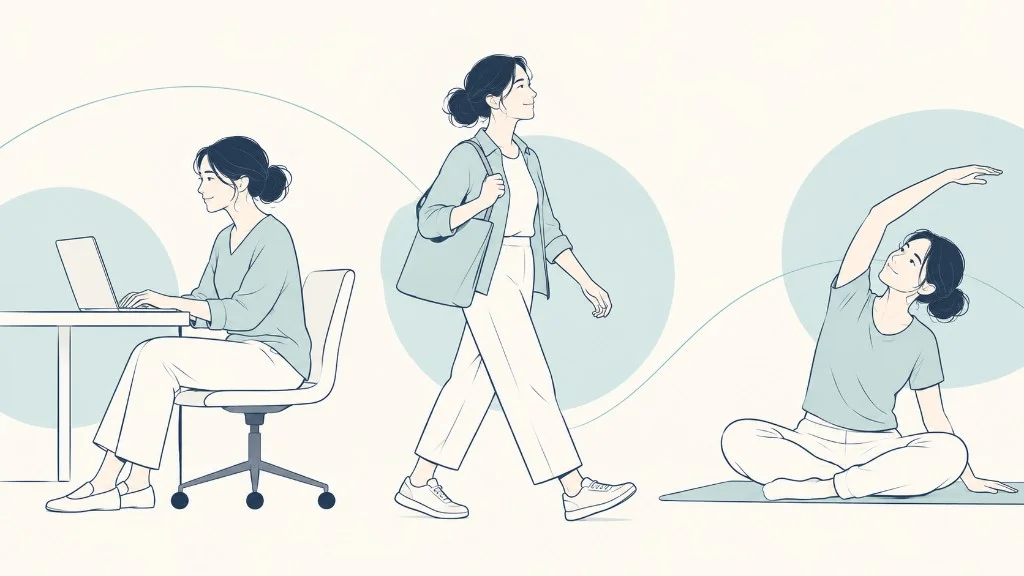
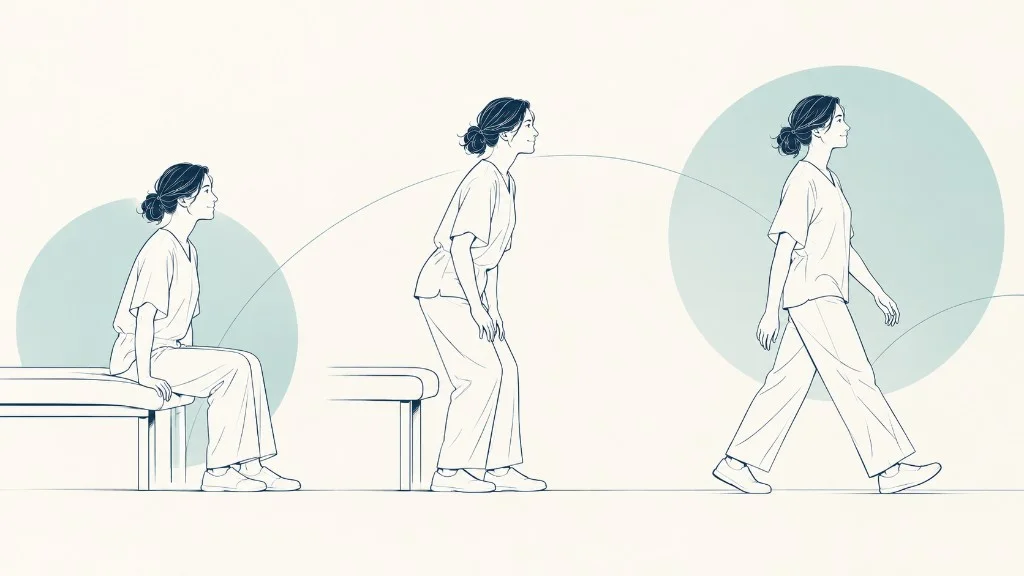
Early recovery is the incision, the anesthetic, and getting home. Walking and basic activity come next, usually in short repeats rather than one long outing. Progressive activity is the stretch where you add distance and ordinary tasks as the surgeon allows.
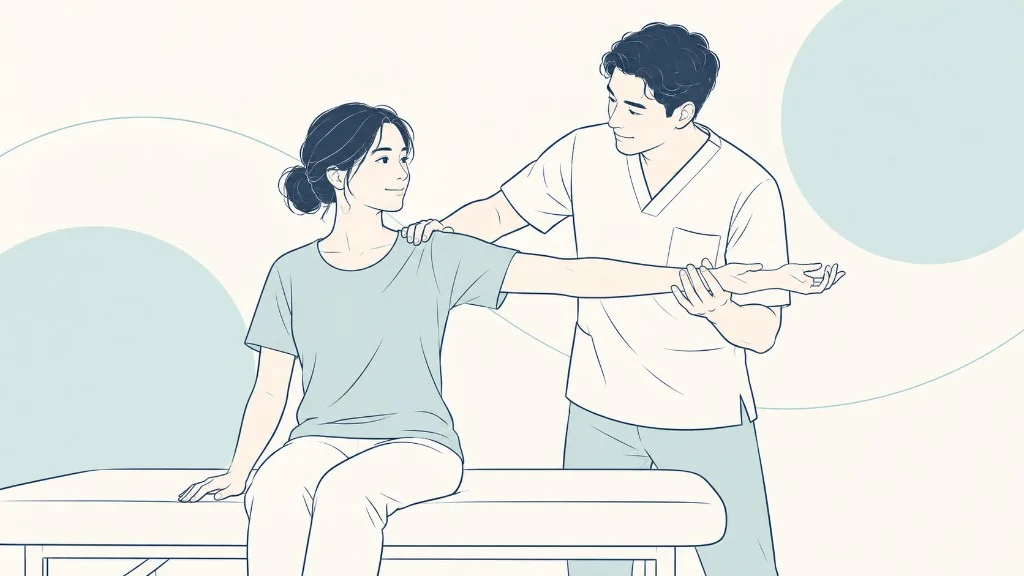
Physical therapy, when it is used, belongs in that stretch, aimed at the activities you need rather than at a brand of exercise. Return toward a normal routine is the last stage, and it is a slope, not a date. Some people are at a desk while still limiting lifts. Some are walking well and still not ready for their old job.
Timeline
What tends to come next, without a week number that fits everyone
The honest script is a sequence of stages, with a wide range around them. A chart that assigns every symptom to a numbered week is more specific than the evidence.
- Early recovery. Incision care, pain control, and getting home. Many people leave the same day or within two days if fusion was not added.
- Walking and basic activity. Short, frequent walks, often starting once anesthesia wears off. Sitting and lying down are allowed. Heroic distance is not the goal.
- Progressive activity. Longer walks and ordinary tasks, inside the limits you were given on lifting, bending, and twisting.
- Physical therapy where appropriate. Not automatic on a Tuesday in week three. Used when it helps the specific activities you are returning to.
- Return toward a usual routine. Desk work often comes before heavy work. Fusion, if it was added, keeps its own precautions while bone heals.
If your instructions name a week, follow those. This picture only shows the order.
Anchors that patient guidance actually gives
MedlinePlus describes a laminectomy without fusion in practical terms. You are encouraged to get up and walk as soon as the anesthesia wears off. Most people go home the same day or one to two days later.
Many people can drive again in one to two weeks. Return to light work is often around four weeks. Those are population descriptions, not appointments. They assume the operation was a decompression, your course is uncomplicated, and “light work” means light work.
AAOS OrthoInfo on lumbar stenosis discusses surgery in the context of that condition, including the reality that recovery depends on the person and the procedure. It is not a second calendar that fills in the weeks MedlinePlus left blank. If a blog assigns “week 6: full bending” or “week 12: sports,” and neither your surgeon nor these sources said it, treat that assignment as invented.
| Period | What is commonly encouraged | What varies |
|---|---|---|
| Day of surgery | Walking once anesthesia wears off, if fusion was not added | Nausea, low blood pressure, pain, and whether fusion was part of the operation |
| Same day to about two days | Discharge home with wound and activity instructions | Age, other illnesses, the number of levels, and support at home |
| First weeks | Short walks; limits on lifting, bending, and twisting | How strict the limits are, and how much help you need with stairs and shopping |
| About one to two weeks | Driving, for many people, if you can brake safely and are off impairing medicines | Pain, opioids, and your surgeon's rule. Do not drive because a chart said day ten |
| Around four weeks | Light work, especially after decompression alone | A physical job may be much later. Fusion often changes this date |
What moves the dates
Fusion is the largest modifier. Joining a level asks bone to heal and usually adds hospital time and stricter precautions. In the Swedish Spinal Stenosis Study, stays averaged 7.4 days with fusion and 4.1 days with decompression alone.
AAOS material on spinal fusion is the place to read what fusion itself involves. A laminectomy-plus-fusion recovery is not a laminectomy recovery with a few extra days pasted on. The procedure those extra limits are protecting is described in What Is Lumbar Spinal Fusion?.
The job is the next modifier. A laptop can come back while you still cannot lift a toddler or a case of water. “Returned to work” in a study often means returned to some work, not returned to the job you had. Ask which lifts are banned and for how long, in writing, before you promise a date to an employer.
Other illnesses, a complication, living alone, and the number of levels all belong on the same list. None of them is a character flaw if your week four does not match a neighbor’s.
Decision factors
What moves the dates
The sequence above is an order, not a calendar. These are the modifiers this article actually names. None of them is a character flaw if your pace does not match a neighbor's.
Whether fusion was added
The largest modifier. Bone has to heal, and the precautions are stricter. In the Swedish trial, stays averaged 7.4 days with fusion and 4.1 days with decompression alone.
The job you return to
A laptop can come back while you still cannot lift a toddler or a case of water. Returned to work often means some work, not the job you had.
The rest of the situation
Other illnesses, a complication, living alone, and the number of levels all change the pace.
Ask which lifts are banned, and for how long, in writing, before you promise a date to an employer.
What is not a stage
A fever, a wound that is opening or draining, calf swelling, chest pain, or new trouble controlling bladder or bowel is not “week two.” Call the team you were told to call, or emergency services if the problem is severe. Soreness that follows a longer walk and settles with rest is a different signal.
Learn the difference before you need it. The questions to prepare are for the decision before surgery. After surgery, the written discharge instructions outrank them.
What the months beyond this early sequence tend to hold, including symptoms that linger, is in Life After Laminectomy. The early weeks are allowed to be ordinary and uneven. They are not a test you pass by hitting someone else’s Thursday.
How to use the anchors without turning them into a test
Put the MedlinePlus ranges on a card and leave the rest blank until your own team fills them. Walk the day of surgery, if you did not have a fusion and nothing else is stopping you. Home within a couple of days is common, not owed.
Driving when you can brake and you are not impaired, often in the one-to-two-week window, and only if your surgeon agrees. Light work around four weeks is a description of many decompression-only recoveries, not a human-resources deadline you must meet to have had a successful operation.
Build the day around short walks rather than one outing that wipes out the evening. A hallway, then the block, then a longer loop, is the shape that matches “short and frequent.” Sitting to recover is allowed.
Lying down all day, once you are medically able to walk, is not the program. You do not earn a faster fusion, if you did not have one, by walking farther than the pain and the instructions allow. You earn a setback.
Prepare the house the way MedlinePlus suggests people do: everyday items at waist height, a chair you can get out of, and a driver for the first days. Those preparations are not medical complications. They are how the early stage stays boring, which is what you want. If you live alone, say so before the operation so discharge is planned around that fact rather than discovered at noon on day one.
Pain, medicine, and the story you tell yourself
Incision pain and muscle pain are the early story. Nerve pain in the leg may ease faster, slower, or unevenly. A day when the leg aches after a longer walk is not week-by-week failure.
A day when a foot is newly weak is not soreness. Learn that split out loud, and give the people who live with you the same split, so they do not interpret every wince as an emergency or every emergency as a wince.
Stronger pain medicine, if prescribed, is a short bridge. It is also a reason not to drive. Do not add anti-inflammatory drugs the hospital told you to hold.
Do not decide the operation failed because you still need a pill in week two. The questions you prepared before surgery were about goals. The goal in this window is safe walking and a healing wound. The goal about distance and work comes after, on your surgeon’s clock, not on a printable calendar that never met you.
Sleep, stairs, and the first shower are the unglamorous tests of the first week. A firm chair with arms, a handheld shower if bending to a tub is forbidden, and someone to carry groceries are worth more than a motivational recovery quote. If a walk leaves you worse the next morning, that walk was the wrong length.
Shorten it. Do not cancel walking entirely unless the team tells you to. The early stage fails in two directions: doing nothing, and doing a pre-surgery workout to prove you are fine.
Call for the problems that are not stages. A soaking dressing, a fever, a calf that swells, chest pain, or a new loss of bladder control should not wait for the four-week work discussion. Save the work discussion for when the wound is quiet and you know which lifts are still off limits.
Employers can be given a range. They should not be given a fake Thursday. You can revise the range when your own walking says the range was wrong.
That revision is normal recovery. It is not falling behind a schedule nobody was able to individualize in advance.
Friends will offer their week numbers. Take the offer as kindness and not as data. Their fusion, their one-level decompression, and your operation are different procedures even when the discharge paperwork uses the same word.
The only numbers worth copying are the ones tied to a source you can open, and even those are ranges. MedlinePlus is a range. Your instructions are a plan.
When you tell people how you are doing, describe the walk and the wound, not the week number. “I am walking the block twice a day and the incision is dry” is a recovery. “I am behind week three” is a comparison with a chart that was never about you.
If fusion was added, ask which limits expire when the wound heals and which last while bone is knitting. Mixing those lists is how people either under-protect a fusion or over-restrict a decompression. Write them in two columns if you need to.
The columns are the whole sophistication this timeline can honestly offer. Everything else is your body, on your stairs, this month. Bring questions about those stairs to the follow-up, not a screenshot of someone else’s calendar.
Your team can change a limit. A webpage cannot see your incision, and it should not be asked to. If something in the written instructions is unclear, ask before you invent a compromise.
Guessing at lifting limits is how people either tear at a healing wound or stay in a chair longer than anyone intended. How therapy fits into that plan is covered in Physical Therapy After a Laminectomy.
Frequently asked questions
Why does my surgeon's timeline differ from a chart I found online?
Because the chart is a composite and you are one operation. The number of levels, whether fusion was added, your other illnesses, and whether your job is a desk or a warehouse all move the dates. MedlinePlus describes typical anchors, such as walking the day of surgery and discharge within a couple of days without fusion. It does not promise a symptom-free week four. Use your written instructions when they conflict with a general article. The article cannot see your incision or your job.
When can I walk, drive, and work?
Walking is the earliest piece. MedlinePlus says that if you did not have a fusion, the team encourages you to get up and walk as soon as the anesthesia wears off, and that many people go home the same day or one to two days later. The same resource says many people can drive again in one to two weeks and return to light work around four weeks, especially without fusion. Desk work is sometimes sooner. Heavy lifting is not on that early list. Your surgeon's limits on bending, lifting, and twisting override a general range.
Is pain in the first weeks a sign the surgery failed?
Incisional pain and muscle soreness are expected after an operation on the back. A short course of stronger pain medicine is commonly used and then reduced. What is not expected as a normal milestone is new or worsening weakness, saddle numbness, or a change in bladder or bowel control. Those need a call to the surgical team or emergency care, not a plan to walk them off. Leg symptoms that were the reason for surgery often ease on a different schedule from the incision. One can improve while the other still hurts.
Does adding fusion change recovery?
It usually lengthens it. The hospital stay is longer, activity limits are often stricter, and the bone has to heal across the joined level, which is a different project from a decompression alone. In the Swedish stenosis trial, hospital stays averaged 7.4 days with fusion and 4.1 days with decompression alone. That is one study's average, not your discharge date. Ask which restrictions are about the wound and which are about protecting a fusion. They are not the same list.
When does physical therapy start?
Not on a universal week. Some people learn walking and transfers before surgery. Others start a formal program after the surgeon clears the incision and the early limits. Therapy is for the activities you need, not for a protocol named after the operation. If fusion was added, the therapist needs those precautions in writing. If decompression was alone, early walking may be most of the program for a while. Starting vigorous exercise because a calendar said week three is how restrictions get ignored.
Key takeaways
- Use stages, not a fake week-by-week calendar. Walking starts early. Everything after that varies.
- MedlinePlus anchors include same-day walking without fusion, discharge within about two days, driving in one to two weeks, and light work around four weeks.
- Fusion, more levels, other illnesses, and a physical job all slow the timetable.
- New weakness or bladder changes are not a recovery phase. They need contact with the surgical team.
References
- Laminectomy. MedlinePlus Medical Encyclopedia, U.S. National Library of Medicine. 2024.
- Lumbar Spinal Stenosis. OrthoInfo, American Academy of Orthopaedic Surgeons.
- Försth P, Ólafsson G, Carlsson T, et al. A Randomized, Controlled Trial of Fusion Surgery for Lumbar Spinal Stenosis. The New England Journal of Medicine. 2016;374(15):1413-1423. 2016.
- Spinal Fusion. OrthoInfo, American Academy of Orthopaedic Surgeons.
Prepare questions for your consultation
Organize your symptoms, imaging, and treatment history into clear questions for a spine specialist. The questionnaire does not decide candidacy.