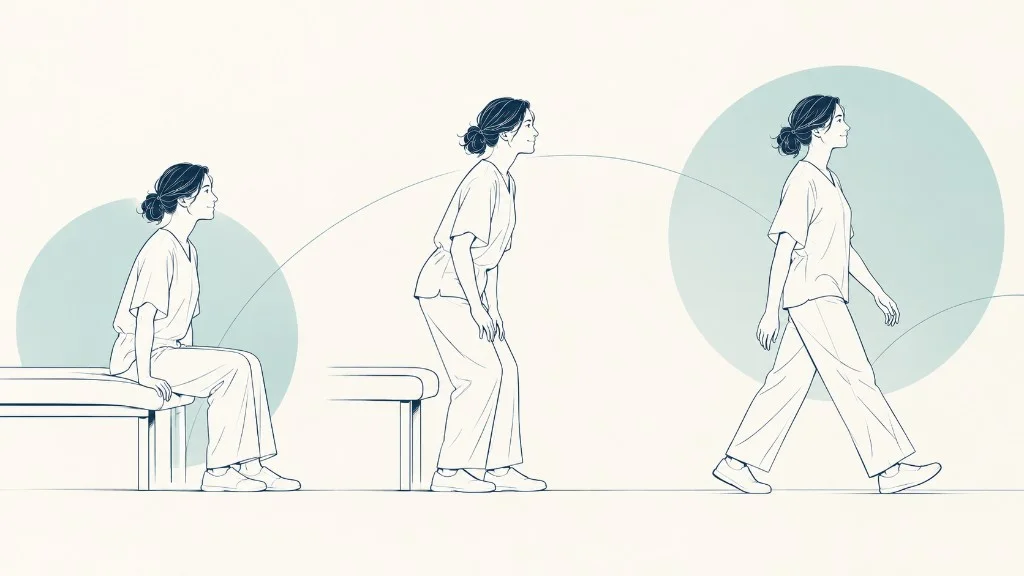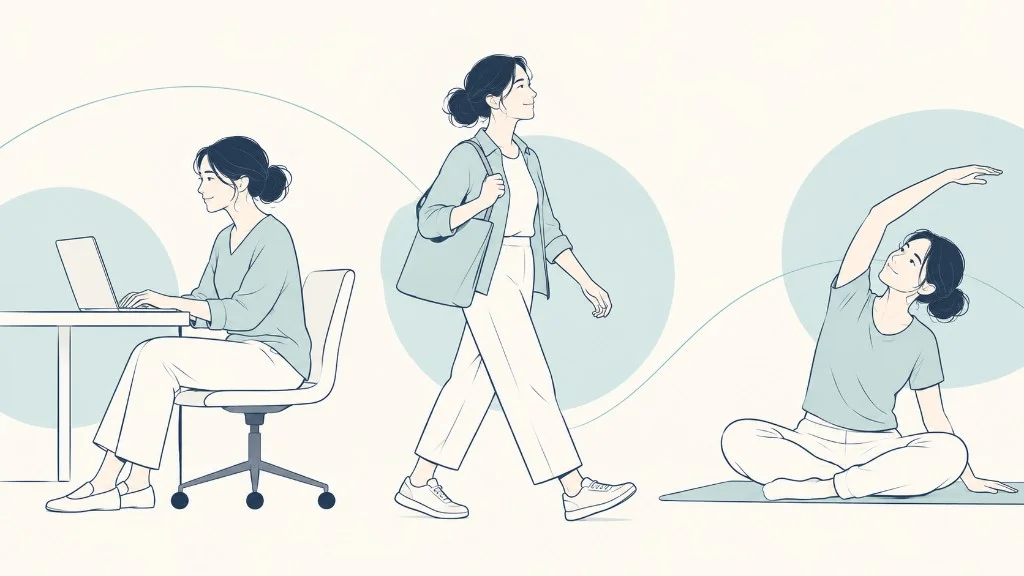
The long term after a laminectomy is less cinematic than the week of surgery. The incision closes. Walking either gets easier or it does not.
The rest of the spine keeps being a spine of your age. People do well inside that plain description, and they do poorly when they were promised a permanent reset.
The operation is explained in What Is a Laminectomy? The early weeks are in Laminectomy Recovery Timeline. This article starts after that slope, when the question becomes what life actually changed.
What “better” was supposed to mean
MedlinePlus says laminectomy for spinal stenosis often provides full or partial relief of symptoms, and that future spine problems are possible for anyone after spine surgery. Partial is a designed outcome, not a consolation prize. The symptom most likely to move is the leg pain or heaviness that came from the crowded nerve.
AAOS OrthoInfo describes leg pain as tending to improve more than back pain. A back that still has arthritic ache, attached to legs that can finish the store, is often the trade the operation could actually make.
If both are unchanged after you have healed from the approach itself, the match between the level and the symptom belongs back on the table. A technically open canal at the wrong level produces a scar and the old walk. That is a targeting problem, not a failure of “the long term.”
Comparison
What long-term life is actually grading
Leg pain tends to improve more than back pain. Partial relief is a real result. None of these outcomes is a lifetime cure rate.
Leg symptoms
The usual target. Walking distance and nerve pain are the results worth writing down before surgery so you can recognize them later.
Back pain
Often improves less. Discs and facet joints are still there. Lingering back pain is not automatic proof the decompression missed.
The rest of life
Work, walking, and whether you need another operation someday. These are separate from a single pain score and from the scar.
No one of these is a lifetime cure rate. Combining them into one percentage hides the result you care about.
What the years can still bring
Other levels can narrow. The operated level can hurt for reasons that are not “the lamina grew back.” Scar, a recurrent disc issue, a new slip, or an adjacent problem are all possible and none is guaranteed.
In the Swedish stenosis trial, about 21 percent of the decompression group and 22 percent of the fusion group had additional spine surgery over a mean of 6.5 years. That is a rate inside one randomized population of people who already needed stenosis surgery, not a coin flip for you. It does show that “never again” was not the finding.
Early medical risk is a different chapter from late life. A Medicare claims analysis of stenosis operations in 2007 found life-threatening complications in 2.3 percent after decompression alone and 5.6 percent after complex fusion, with 30-day rehospitalization in 7.8 percent and 13.0 percent. Those numbers describe the size of the operation around the time it happens.
They are not a description of year five. They are a reason the extent of surgery belongs in the original decision, which is discussed in Is a Laminectomy Alone Enough for Spinal Stenosis?.
| Question | What experience and guidance support | What they do not support |
|---|---|---|
| Will the legs improve? | Often, fully or partly, when they were the symptom of the tight level | A promise for back pain of a different cause |
| Am I finished with spine problems? | Many people are, for a long time | A guarantee. Other levels can still age |
| Do I need yearly scans? | Images when symptoms change or another procedure is considered | Surveillance for its own sake in a person who walks well |
| Was it worth it? | Compare with the walking limit you wrote down beforehand | A single success percentage borrowed from a different operation |
How to live in the result you actually got
If the walk improved, protect it the ordinary way: stay active, treat new problems as new, and do not spend the good years monitoring the canal. If the walk did not improve, say so early enough that the surgeon can reconsider the level, the hip, or the arteries, rather than waiting for a result that was never likely to arrive late. If fusion was part of the operation, long-term questions about the next level are a different topic, covered when fusion is the subject, not as a surprise appendix to a decompression.
The questions to prepare were for the decision. Afterward, the useful question is smaller. Which symptom changed, and is the change enough for the life you were trying to get back?
A laminectomy can be worth it inside that question. It cannot answer a larger one about a spine that never hurts. Nobody’s operation can.
The life that counts as a result
Count errands, walks, and nights you are not planning around leg numbness. Those are the outcomes the canal operation could touch. Count them against a note you made before surgery, if you made one.
Memory inflates the “before” or erases it, and either distortion makes the result unreadable. A walk to the store that used to require two sits is a result even if the back is not silent. A back that is silent and a walk that still stops you at the mailbox is not the result the decompression was built for, and it deserves a reassessment rather than more patience with the wrong target.
Work belongs in the same notebook. Returned to a desk is not returned to a warehouse. If your job is physical, get the lifting answer in writing when you are cleared, and do not import a permanent ban from a fusion pamphlet if you did not have a fusion.
If you did have a fusion, do not import the shorter decompression timeline either. The early sequence is in the recovery article. The long term is whatever remains after those limits have done their job.
When to reopen the question
Reopen it for a new walking limit, new weakness, or bowel and bladder changes. Reopen it if the original leg pain never moved and you are past the early healing window your surgeon described. Do not reopen it every time the weather aches in a joint the operation never claimed to replace.
Imaging, if it happens, should chase a new decision. A comfortable person does not need a yearly MRI to prove the lamina is still gone.
Other people’s anniversaries are poor data. Someone who “had it all come back” may have had a different level, a fusion, or a hip. Someone who “never thought about it again” may have had a single-level decompression and a desk job.
You can be glad for them and still measure your own legs. The Swedish figure of roughly one additional spine operation in five, over several years, in people already sick enough to be randomized, is a ceiling on fairy tales. It is not your appointment. Live in the result you have, and spend the next visit, if you need one, on the symptom that actually changed.
Exercise after you are cleared is ordinary exercise, matched to what still hurts. A walking limit that resolved does not need a lifetime stenosis protocol. A back that still aches may like the same things other aching backs like, without a special laminectomy identity.
New nerve symptoms get an exam before they get a new workout. The point of a good long-term result is that the operation becomes a smaller part of the week, not a personality.
Keep the operative note and the old walking baseline in the same folder. If a future clinician suggests another procedure, those two pages answer whether the first one did its job and what anatomy remains. You should not have to reconstruct that from memory in a parking lot.
Life after laminectomy is mostly life. The canal is allowed to be a closed chapter when the legs say it is, and an open question when they do not. Both are more accurate than a promise that the chapter can never be reopened, or a fear that it never really closed.
Tell the people around you the same narrower story, or they will keep waiting for a cure you did not have and grieving a failure you did not have. “My legs walk farther. My back still gets tired.
I do not need another scan unless that changes.” That sentence prevents a lot of unhelpful advice. It also gives you a script for the next clinician, who may never have seen you before and will otherwise start from the scar.
The scar is not the outcome. The legs are.
If the legs are not better, the script changes and should change early. Bring the old baseline, the operative note, and an honest no. Ask whether the level that was opened was the level that matched, and whether the hip or the arteries need a turn.
A long-term life after laminectomy includes the right to say the operation did not deliver the symptom it was for. That sentence is more useful than staying loyal to a decision past the point where the result is clear. Loyalty is for the follow-up. Accuracy is for the result.
Years later, the most useful habit is boring. Stay as active as the legs allow. Treat a new pattern as new.
Do not collect scans to decorate a good result, and do not explain away a bad one as “just the healing” after the healing window your surgeon named has passed. MedlinePlus already said the quiet part: relief is often partial, and later spine problems can happen. You can hold both without turning every birthday into a referendum on the operation.
The referendum happened when you compared the walk you have with the walk you wrote down. After that, life is allowed to be about other things. The lamina does not need an anniversary.
Your plans do. Make one plan that has nothing to do with the scar, and notice whether the legs will let you keep it. That is the long-term test, and it does not require another adjective from a radiology report.
If the plan holds, the operation has earned its quiet. If the plan fails because the legs will not allow it, that failure is information, and it belongs in a clinic rather than in another year of hoping the result will ripen. Bring the original walking note when you go.
The comparison is the result. Without that note, the visit becomes a debate about memory, and memory is a poor outcome measure. The note is a few lines. It is also the only baseline the operation can be judged against later, when memory has started to edit the story of how far you could walk.
Frequently asked questions
Will I be cured?
Cured is the wrong word. The overcrowding that was removed does not grow back overnight, and the rest of the spine continues to age. MedlinePlus says laminectomy for stenosis often provides full or partial symptom relief, and that people can have spine problems later. Partial relief that lets you walk farther is a real result. It will disappoint you if the only result you agreed to was a back that feels twenty years younger. Ask which symptom, usually the legs, the operation was for. Judge that symptom. Do not judge the operation by every future ache.
Why does my back still hurt if my legs are better?
Because the operation makes room for nerves. It does not replace discs or stop facet joints from being arthritic. Patient guidance from AAOS describes leg pain as more likely to improve than back pain after stenosis surgery. A back that still aches, with legs that walk farther, can be the expected pattern rather than a failure. A back that is the same and legs that are the same, after a fair recovery window, is a reason to ask whether the tight level was the right target. Those two leftovers are not the same conversation.
Can stenosis come back?
The operated level can scar or, less often, narrow again, and other levels can narrow for the first time because they kept aging. Neither event is scheduled. New walking limits or new weakness deserve a new exam and, if surgery is being reconsidered, new images. They do not prove the first operation was pointless, and they do not prove you must have another one. Many people never need a second stenosis operation. The Swedish trial's later surgery rates, about one in five over several years in that specific group, are not a personal forecast.
Do I have permanent lifting limits?
Not as a universal rule after decompression alone. Early weeks have limits on lifting, bending, and twisting, and those limits are looser or gone for many people once the surgeon clears them. Fusion, if it was added, carries a longer protection period while bone heals, and that period is still not a lifetime ban written by this article. Ask what is permanent, if anything, for your operation. A neighbor's ban is not yours. Returning to a physical job is a work question your surgeon can answer with your job in mind.
What should long-term follow-up look like?
Enough to check the wound, the walking, and any nerve deficit, then as-needed if symptoms change. Annual imaging of a comfortable person is not a requirement this article can justify. Come back for a new walking limit, new weakness, or signs of infection early on. Come back with the original goal written down, so the visit is about whether that goal happened. A life after laminectomy is allowed to include ordinary back pain, exercise, and years in which you do not think about the canal. That quiet is one of the good results.
Key takeaways
- Judge the operation by the leg symptoms it was meant to change. Back pain often lags behind.
- Full or partial relief is the language patient guidance uses. Future spine problems remain possible.
- Another level can narrow later. That is aging, not proof the first decompression failed.
- There is no single lifetime figure that survives contact with different operations and different outcomes.
References
- Laminectomy. MedlinePlus Medical Encyclopedia, U.S. National Library of Medicine. 2024.
- Lumbar Spinal Stenosis. OrthoInfo, American Academy of Orthopaedic Surgeons.
- Försth P, Ólafsson G, Carlsson T, et al. A Randomized, Controlled Trial of Fusion Surgery for Lumbar Spinal Stenosis. The New England Journal of Medicine. 2016;374(15):1413-1423. 2016.
- Deyo RA, Mirza SK, Martin BI, Kreuter W, Goodman DC, Jarvik JG. Trends, major medical complications, and charges associated with surgery for lumbar spinal stenosis in older adults. JAMA. 2010;303(13):1259-1265. 2010.
Prepare questions for your consultation
Organize your symptoms, imaging, and treatment history into clear questions for a spine specialist. The questionnaire does not decide candidacy.