Many people treat bedtime as a problem with a correct answer. One pillow fails, so they add a second. The waist feels unsupported, so they roll a towel.
Stomach sleeping gets blamed, then side sleeping, then the mattress. A position that lets you stay asleep is worth keeping. It is a comfort strategy, and it can be a clue about which postures your back will tolerate. It is not a diagnosis of nerve compression, and it is not a treatment that has been shown to correct whatever is crowding a nerve.
NIAMS describes back pain as one of the most common medical problems in the United States. It also lists chronic poor sleep, along with depression or anxiety, among factors that can make back pain more frequent and more severe. That relationship runs in both directions.
Pain can break up the night. A broken night can make the next day feel worse. Changing how you lie down may help the first problem for some people. It does not, by itself, explain or fix the second.
This page stays inside that limit. It covers what a comfortable position can and cannot tell you, what NIAMS actually suggests, why a flexed posture feels easier for some people whose leg symptoms follow an extension pattern, which nerve symptoms need a clinician rather than another pillow, and when to seek care.
What a comfortable position can and cannot tell you
Sleep is hours in one shape. During the day you stand, sit, walk, and shift. At night you may hold one arrangement long enough to notice it.
That is useful information. It is narrow information.
A useful night report sounds like this: side lying with a pillow between the knees let you sleep, lying flat on your back woke you with buttock and calf symptoms, and rolling to a curl settled those symptoms within a few minutes. That report tells a clinician which postures you can sustain. It can also hint that symptoms change with the curve of the lower back.
It does not name the structure. Muscle fatigue, a facet joint, a disc, stenosis, and the hip can all feel different in different postures. More than one can be present.
NIAMS lists symptoms that already show how nonspecific position can be. Pain may worsen with resting, sitting, or standing. It may come and go.
Some people are stiff on waking and feel less pain once they are up and moving. Pain may stay in the back or travel into the buttock, leg, or hip. Numbness or weakness may show up in the legs or feet.
None of those lines is a sleep-position diagnosis. They are reasons to describe the pattern carefully, including what happens after you lie down.
Comfort versus diagnosis
What a sleep position can and cannot tell you
A position you can stay in is information about comfort. It is not a test that names the cause or proves a treatment.
What it can tell you
Which arrangement you can sleep in, whether symptoms ease when the hips and knees are bent, and whether the legs are part of the story.
What it cannot tell you
Which structure is irritated, whether a nerve is compressed, or that the position is correcting anything. Relief is not a scan.
NIAMS offers sleep arrangements as ways to live with back pain. It does not rank a winning posture or publish a pillow trial.
Stiffness on waking that eases once you move is a pattern NIAMS lists. It is not, by itself, proof of a compressed nerve. Track whether the morning trouble is stiffness that loosens with walking, or leg symptoms that were already building in bed.
One comfortable night is an anecdote. A week of notes is a clue. The examination, and imaging if someone orders it, sorts the mechanical and structural problems NIAMS groups together: sprain, strain, disc changes, a herniated disc, spondylolisthesis, stenosis, and others. Sleep position does not do that sorting.
What NIAMS suggests for sleep, without a ranking
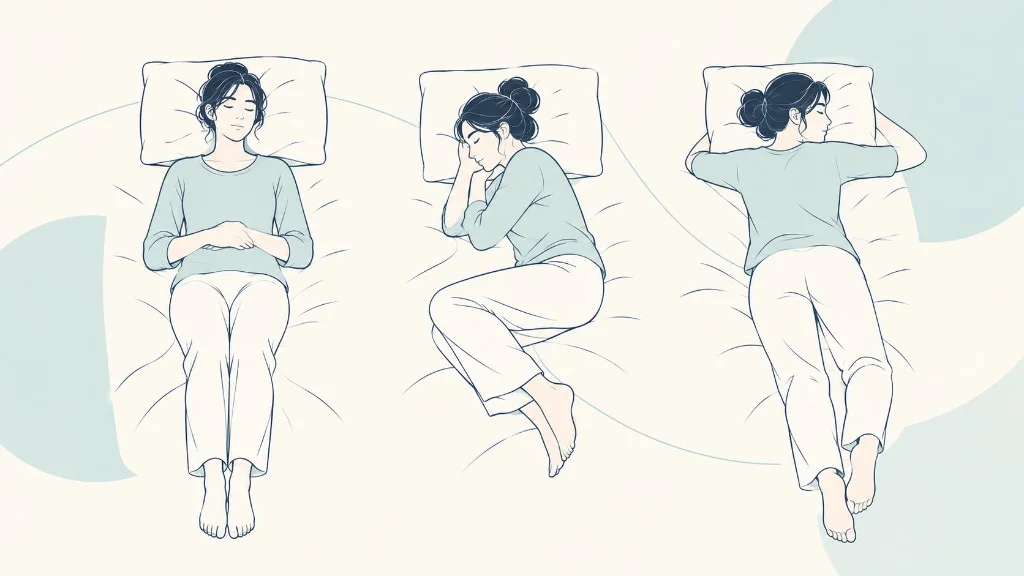
In its section on living with back pain, NIAMS gives three practical lines. Sleep on your side, and place a small pillow between your knees. If you tend to sleep on your back, place a pillow under your knees. If possible, try to avoid sleeping on your stomach.
Read those lines as written. They are suggestions for getting through the night. They are not a ranked list, and they are not attributed to a study that tested pillow brands, mattress types, or nerve compression.
NIAMS does not say side sleeping heals a disc or that a knee pillow opens a narrowed canal. It also does not say that people who sleep on the stomach caused their pain, or that avoiding the stomach will make nerve symptoms stop.
The suggestions are also easy to use badly. “Side sleeping” is not one position. A side posture with the hips and knees fairly straight is different from a curled side posture.
A pillow that is too thick can twist the waist; a pillow that is too thin can leave the top knee falling forward. NIAMS says a small pillow between the knees. It does not specify a height in inches, and this page will not invent one. If a setup increases leg tingling, stop treating it as the goal and describe that result to a clinician.
Back sleeping with support under the knees is the other NIAMS option, for people who already tend to sleep that way. The pillow changes the position of the hips and reduces the arch some people feel when they lie flat. It is an option, not a requirement to abandon side sleeping if side sleeping is the arrangement you can sustain.
Stomach sleeping is the one NIAMS suggests avoiding when possible. Some people can only fall asleep prone. For them the honest goal is not a perfect diagram.
It is whether a partial change, such as a pillow under the pelvis or a shift toward side lying for part of the night, is tolerable. If it is not, the night is still not a failed treatment. It is a limit you report.
| Arrangement | What NIAMS says | What it does not show |
|---|---|---|
| On your side | Sleep this way, with a small pillow between the knees | That side sleeping treats nerve compression, or that it is better than back sleeping for everyone |
| On your back | If you tend to sleep this way, place a pillow under the knees | That you must switch to your back, or that the pillow is doing more than changing comfort |
| On your stomach | Try to avoid this when possible | That stomach sleeping caused the pain, or that avoiding it will resolve nerve symptoms |
Two other NIAMS lines belong next to the pillow advice. Avoid bed rest. Limit activities that cause pain, and gradually increase activity as you tolerate it.
Regular sleep is listed among healthy habits. The point of a better position is a usable night, so that staying in bed all day does not become the plan. Check with a doctor or physical therapist before you start an exercise routine. That caution is about the exercise, not about declaring one sleep posture superior.
When bending the hips and knees feels easier
Some people are not looking for a general back-pain position. They are looking for a way to lie down that keeps leg symptoms quiet. The daytime version of that pattern is covered in Lower Back Pain When Standing vs. Sitting.
Standing and walking bring on buttock or leg pain, heaviness, numbness, or tingling. Sitting or leaning forward eases it. At night, the same person may notice that lying flat, with the lower back arched, stirs the legs, and that drawing the knees up settles them.
A 2022 review describes lumbar spinal stenosis symptoms as often provoked by extension and eased by flexion. Extension is the arched position. Flexion is the bent-forward position.
A side-lying curl, or lying on the back with the knees supported, moves the lumbar spine toward flexion. For some people with that symptom pattern, a flexed sleep posture is more tolerable. The review’s point is about how the syndrome behaves.
It is not a sleep study, and it does not show that the posture treats the stenosis. The narrowing is still there in the morning. You have found a way to get through the night, which matters, and which is a different claim from opening the canal.
A flexed position can be a reasonable comfort trial if leg symptoms already follow the extension pattern. It can be the wrong trial if pain is worse when you sit and bend, and it can be irrelevant if the pain is in the groin. The condition itself is explained in What Is Lumbar Spinal Stenosis?.
Night posture may match a pattern you already have. It does not stand in for the diagnosis.
Note the position that provoked symptoms, the position that eased them, and whether the change was in the back or the leg. Do not force a flexion posture that makes the leg numb or weak. Intolerable is a result. Report it.
Nerve symptoms a pillow cannot name
Nerve compression is a conclusion, not a sensation. People use the phrase for several different problems NIAMS lists separately. A herniated disc can press on a nearby nerve.
Spinal stenosis is narrowing that puts pressure on the spinal cord and nerves. Spondylolisthesis is a vertebra that slips out of place or gradually moves out of alignment. Sprains, strains, and joint changes can hurt without any nerve being compressed.
These can overlap. A night that feels better on your side does not tell you which line you are on.
What you can report is the symptom, not the label. Pain that travels into the buttock or leg, numbness, tingling, or a leg that feels weak are findings to say out loud. Lower Back Pain and Leg Numbness walks through how clinicians separate spine-related leg symptoms from other causes.
A sleep note belongs in that conversation as context: which position stirred the leg, which position calmed it, and whether the foot, the calf, or the thigh was the part that changed. It does not replace the conversation.
Fast relief after you roll over is evidence that posture can change the symptom in the moment. It is not proof the problem is minor, and it is not a cure. Stenosis symptoms can ease when you sit during the day without the sit becoming a treatment.
Disc-related leg pain can also change with position. So can pain that is not from a nerve.
If the leg gives way, the foot slaps, or you cannot push up onto the toes the way you could last week, that is not a pillow problem. NIAMS lists weakness, pain, or numbness in the legs among the reasons to see a doctor. A more comfortable position can continue while you are being evaluated. It should not hide a change in strength.
Numbness has a similar limit. A foot that tingles in one posture and clears when you move may be something you describe and monitor. A new patch of numbness that is still there after you are up and walking, or numbness with trouble urinating, belongs on the “see a doctor” list rather than on a bedding list.
The position you slept in can be one sentence of the history. It should not be the plan.
Morning stiffness, activity, and when to seek care
Morning stiffness that eases once you are active is a symptom NIAMS lists. It is not, by itself, an emergency. Bed rest is discouraged: use a tolerable position at night, then get up and move.
Get care if pain does not improve after a few weeks. Get care sooner, NIAMS says, for numbness and tingling, severe back pain that does not improve with medicine, pain after a fall, trouble urinating, weakness or numbness in the legs, fever, or weight loss you did not intend. Do not answer fever, a fall, or a new change in weight with a different pillow.
Most people do not need an immediate scan. A comfortable night is not a reason to cancel imaging already tied to leg weakness. The living-with guidance sends exercise questions to your doctor or physical therapist. Medicines stay with the clinician who recommended them.
How to describe the night at a visit
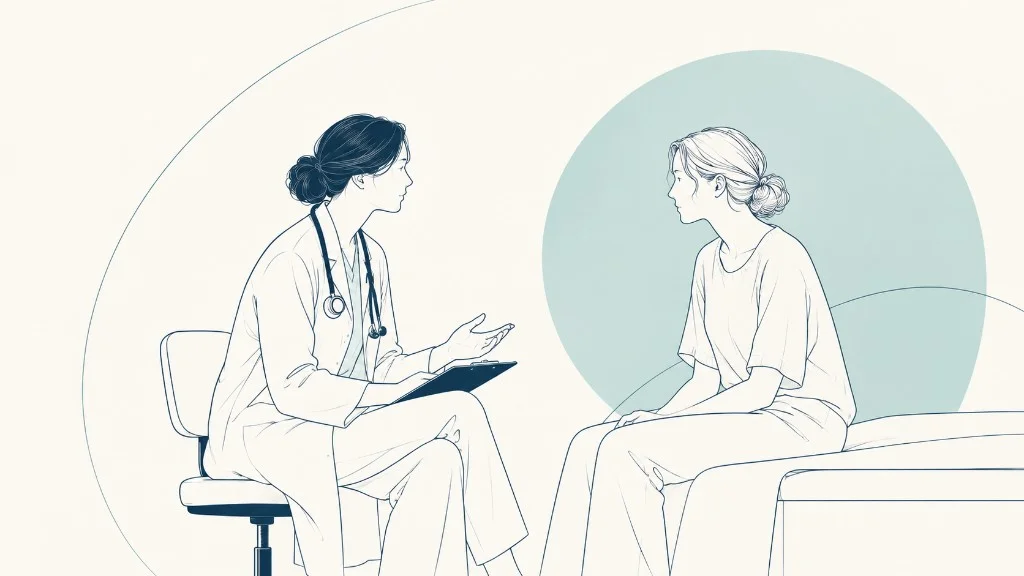
A useful sleep history fits on a short note. For several nights, write the position you started in, the position you woke in, whether a pillow was between or under the knees, whether symptoms were in the back, the buttock, or the leg, and whether changing position changed the symptom. Add the morning: stiff then better with walking, or leg symptoms that were already there before you stood.
Add the day: how long you can stand or walk, and whether sitting helps. That note is the clue, kept in proportion.
Also note positions that failed, including a knee pillow that increased tingling, and whether a better night changed how far you can walk. Those are different questions. The questions to prepare organize symptoms, imaging, and what you have tried. They do not score a sleep position.
Keep the claim at the size of the evidence. Use a side-lying pillow or a pillow under the knees if that matches what NIAMS suggests and what your body tolerates. Notice whether a flexed shape is the one your leg symptoms prefer, and say so.
Do not promote that preference into a cure, a diagnosis, or a single best position. The night is allowed to be more comfortable. The cause of the pain still has to be worked out in the daytime, with a person who can examine you.
Frequently asked questions
Is there one best sleeping position for lower back pain?
No position has been shown to be best for every person with lower back pain. NIAMS suggests side sleeping with a small pillow between the knees, or back sleeping with a pillow under the knees, and avoiding stomach sleeping when possible. Those are comfort suggestions. They are not the result of a trial that ranked pillows or proved a cure.
Why does curling up feel better if I have leg pain with standing?
In lumbar spinal stenosis, symptoms often worsen when the lower back arches and ease when it bends forward. A side-lying curl, or lying on the back with the knees supported, is a flexed posture, so some people find it more tolerable. That is a clue about comfort. It does not show that the position is treating the narrowing.
Should I stay in bed until the pain settles?
NIAMS advises against bed rest for back pain. Limit the specific activities that provoke pain, then gradually increase activity as you tolerate it. Check with a clinician or physical therapist before starting an exercise routine. A more comfortable night is a reasonable goal. A day spent flat is not the treatment.
When is night pain a reason to see a doctor?
See a doctor if back pain does not improve after a few weeks, or sooner if you have numbness and tingling, severe pain that does not improve with medicine, pain after a fall or injury, trouble urinating, weakness or numbness in the legs, fever, or weight loss you did not intend. A bad night by itself is not that list.
Can a pillow tell me whether a nerve is compressed?
No. Relief in one position can mean that posture is more tolerable. It cannot name a disc, stenosis, a joint, or a muscle, and it cannot tell those apart from a hip problem. Leg numbness, tingling, or weakness needs a history and an examination. Imaging, if it is ordered, is read against those findings.
Key takeaways
- A tolerable sleep position is a comfort strategy and sometimes a clue. It is not a diagnosis and not a proven treatment for nerve compression.
- NIAMS suggests a pillow between the knees for side sleeping, a pillow under the knees for back sleeping, and avoiding stomach sleeping when possible. It does not rank a winner.
- A flexed posture may feel easier for some people whose leg symptoms worsen with extension. That pattern does not show the position treats stenosis.
- Seek care if pain lasts beyond a few weeks, or sooner for numbness, leg weakness, trouble urinating, fever, unintended weight loss, or pain after an injury.
References
- Back Pain. National Institute of Arthritis and Musculoskeletal and Skin Diseases (NIAMS), National Institutes of Health.
- Back Pain: Diagnosis, Treatment, and Steps to Take. National Institute of Arthritis and Musculoskeletal and Skin Diseases (NIAMS), National Institutes of Health.
- Katz JN, Zimmerman ZE, Mass H, Makhni MC. Diagnosis and Management of Lumbar Spinal Stenosis: A Review. JAMA. 2022;327(17):1688-1699. 2022.
Prepare questions for your consultation
Organize your symptoms, imaging, and treatment history into clear questions for a spine specialist. The questionnaire does not decide candidacy.