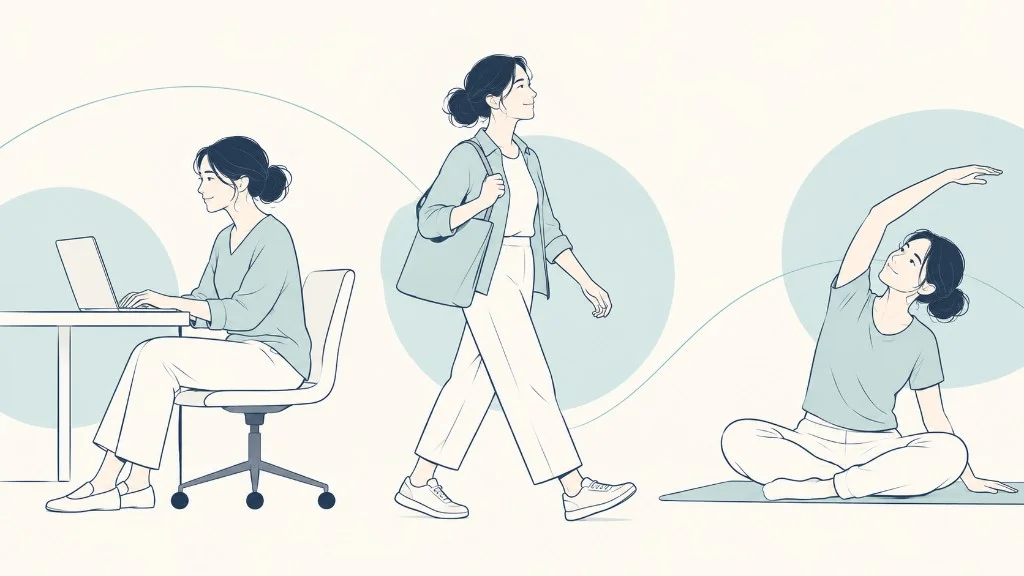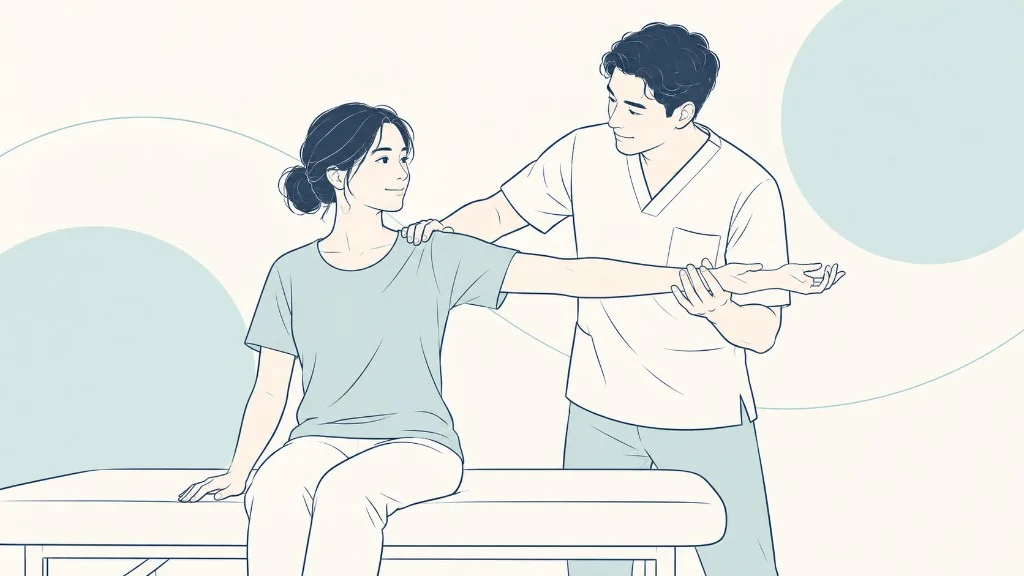
Exercise articles for spondylolisthesis tend to offer one poster of safe moves and one poster of dangerous moves. The slip type splits that poster in two. A teenager with a fresh pars stress injury and a 70-year-old with a degenerative slip and a walking limit should not be handed the same list.
What the slip is, and how it is graded, is in What Is Spondylolisthesis? This page is about movement.
What exercise can change
It can change pain, confidence, and the distance you walk or the practice you tolerate. A 2021 physical therapy guideline says clinicians should use exercise training for chronic low back pain, including strength, endurance, and aerobic work. For older adults, benefit tracked more with doing enough, and progressing it, than with one branded method. An American College of Physicians guideline likewise starts chronic back pain with non-drug care, exercise among it.
It cannot change the percent on the standing film. StatPearls describes the structural problem. Muscle does not tow a vertebra back up the grade scale.
Anyone selling a correction of the grade is selling a result the exercises do not produce. You are allowed to want less pain anyway. That is a real goal.
Comparison
Three slips that should not share one exercise poster
A fresh pars stress, an old quiet defect, and a degenerative slip do not start with the same restriction. Exercise does not pull a vertebra back up the grade.
Fresh pars stress
Often a young athlete in an extension sport. The first change is a break from that sport, then therapy and a gradual return. It is not a lifetime ban on arching.
Old, quiet defect
An adult pars defect that does not hurt does not create a forbidden-movement list. If extension reproduces pain, shorten that position and keep the rest of an active life.
Degenerative slip
Usually a walking limit that eases with sitting. Keep the walks you can finish. Exercise does not pull the vertebra back up the grade.
If the groin, not the walking legs, is what stops you, the hip needs an exam before more spine drills.
Pars stress and isthmic slips
StatPearls describes the common isthmic path as a fatigue injury of the pars from repeated backward bending, often in young athletes, in sports such as wrestling, football, and gymnastics. When that injury is symptomatic, the first exercise decision is usually to stop the aggravating sport for a period, add therapy, and sometimes use a brace, then return gradually under the clinician who is following the bone. That plan is not a lifetime ban on arching. It is a break from the load that was stressing a bone still trying to settle.
An old, painless pars defect found in an adult is not the same as an acute stress reaction. It does not need the teenager’s protocol. It needs honesty about whether it hurts.
If it does not, you do not acquire a forbidden-movement list because the word spondylolysis appeared on a scan. If it does, extension that reproduces the pain is the movement to shorten, while the rest of a normal active life continues.
The type difference, if you are unsure which slip you have, is in Degenerative vs. Isthmic Spondylolisthesis.
Degenerative slips and the walking limit
Many degenerative slips announce themselves as stenosis. Leg symptoms build with walking and ease with sitting or a slight forward lean. NIAMS describes that pattern.
The exercise implication is the same one used for stenosis: do not park yourself in a swayed standing posture for long periods, and do keep the walking you can finish. Shorter loops, a cart, and a seated reset are tools.
Face-down exercises and steep inclines are the usual irritants in this pattern. Hinging at the hips to pick something up is not automatically one of them. “Never bend” is advice imported from a different back-pain script.
Use the script that matches your day. If the groin, not the walking legs, is the limiter, the hip needs a look before you collect more spine drills. How therapy helps and where it runs out is in How Physical Therapy Helps (and Doesn’t Help) Chronic Low Back Pain.
| Problem | Often worth keeping | Often worth changing |
|---|---|---|
| Acute pars stress in a young athlete | A break from the extension sport, then a graded return the clinician directs | Continuing the same arching skill while the bone is irritable |
| Old isthmic slip, few symptoms | Ordinary activity that does not reproduce pain | A new ban invented to match the X-ray |
| Degenerative slip with a walking limit | Shorter walks, a slight lean, strength work that does not force a deep arch | Long swayed standing, steep inclines, face-down drills that numb the legs |
| Any type, new weakness | An examination | Training through a foot that is newly failing |
How to judge a month of practice
Write the activity, not the exercise names. Minutes walked before leg symptoms. Or practices completed without the old back pain.
If the number improves and the next day is livable, the program is working even if you never learned a special spondylolisthesis sequence. If the number does not move, change posture or dose once before you declare exercise useless. If a foot gets weaker, or bladder or bowel habits change, stop the experiment and get examined. Those are not training effects.
The questions to prepare are a way to describe that month at a visit. They do not grade your workout, and they do not convert a slip into a procedure.
A week that respects the type
Pick one outcome line and ignore the rest of the internet for a month. For a degenerative slip with leg symptoms, the line is minutes walked before you must sit. Start with a number you can finish on an average day.
Repeat it most days. Add a minute only after a week that did not steal the next morning. Sit when the legs speak.
A cart or a slight lean is allowed. Face-down work and steep inclines can wait until the minutes are stable, and they may never belong.
For an acute pars injury, the line is not mileage. It is whether you stayed out of the aggravating skill, and whether pain is settling on a timetable your clinician set. Adding “core work” from a general back-pain video, especially if it includes repeated extension, can undo the rest.
Therapy in this setting is specific. It is not a substitute for the sport break, and the sport break is not forever. Return is a clinical decision because the bone, not your motivation, is the variable.
For an old slip that does not hurt, the line is permission. Keep the activity you already tolerate. You do not need a spondylolisthesis program to justify a walk you were going to take.
Inventing precautions for a painless film is how people become patients of their radiology report. If a new pain shows up, then you have a symptom to match, and the type matters again.
What popular advice gets wrong
It treats the word spondylolisthesis as a single contraindication. Squats, running, yoga, and swimming are then banned or blessed as categories. A squat that keeps the spine neutral is a different load from a squat that finishes in a deep arch.
A flat run is a different load from a gymnastics bridge. The category is too coarse to be medical advice. The test is whether your symptom, the one you named, shows up during the set or the next day.
It also treats soreness and nerve symptoms as the same signal. Muscle effort that settles is training. Leg numbness that climbs, or a foot that starts to slap, is not.
Stop the second one and get an exam if it is new. Do not spray, brace, or medicate your way through it. And do not conclude from one bad session that movement is harmful.
Change the posture. The slip will still be there. That was never the contest.
The contest is whether next month’s walk, practice, or workday is more usable than this month’s. A program that cannot be described in that sentence is not a program for this condition. It is a general fitness plan wearing a spine word.
Two more limits keep the month honest. First, do not add someone else’s anti-inflammatory or a leftover opioid to push a session further. Drug choices belong to the clinician who knows your stomach, kidneys, and other prescriptions.
Covering a nerve symptom so you can finish a workout hides the only feedback the slip is giving you. Second, do not switch programs every five days because a new video looked more specific. Specificity here is the type and the symptom, which you already have.
Another sequence of animal-named exercises will not know your pars. Stay with the dose long enough to read it. A month is a reasonable unit. A weekend is not.
If the month helped, keep it and progress slowly. If it did not, change one thing, usually the posture or the session length, and give that version a real run. If weakness appears, leave the experiment.
Surgery is not the punishment for a failed exercise. It is a separate discussion for a matched, limiting nerve problem. The exercise question can be answered without opening that door, and the surgical question should not be answered by how sore you felt on Tuesday.
Share the plan with whoever coaches you, if someone does. A coach who hears “spondylolisthesis” may bench you from everything or may insist you push through nerve symptoms. Give them the narrower instruction: which posture brings on your specific symptom, and which one does not.
A young athlete’s instruction is often “no extension skill until cleared.” An older walker’s instruction is often “stop when the legs declare the limit, and do not chase a single long walk.” Those are coachable.
“Be careful with your spine” is not. Careful is how people end up afraid of tying their shoes while still standing swayed at the sink, which is the posture more likely to bother a stenotic degenerative slip.
Reassess at a month, not at a mood. Moods swing with sleep, stress, and ordinary soreness. The minutes, or the practices completed, swing less.
If you cannot tell whether the month worked, the outcome was too vague and the next month needs a clearer line, not a harder workout. Clarity is the part almost every exercise list skips. The slip already has a name.
The goal needs one too. Write that goal where you will see it before the session, not after, so a bad night does not get to rewrite the month. A single readable line, repeated, is the whole method.
The rest is posture and patience. If you want a person in the room while you set the line, a physical therapy visit is a better use of the month than another list. Bring the type of slip and the symptom.
Leave with a dose. The questions to prepare can travel with you to that visit. They still will not decide on an operation.
They will keep the visit about your month, which is the point of doing the month. How recovery is described after treatment, without a single calendar for every slip, is covered in Spondylolisthesis Recovery Timeline After Treatment.
Frequently asked questions
Can exercise put the vertebra back?
No. The slip is a change in how the bones sit. Strengthening the trunk and hips can change pain and stamina. It does not reverse the X-ray. If a program promises to 'correct the grade,' it is promising something exercise has not been shown to do. Judge a program by walking tolerance, sport tolerance, or how you feel the next day. A follow-up film that is unchanged after you feel better is a normal result, not a sign the exercises failed.
Should I avoid all bending and arching?
No. A blanket ban comes from mixing two different problems. A young athlete with an acute pars stress injury is often pulled out of the extension sport that provoked it, for a period set by the treating clinician. An older adult with a degenerative slip and stenosis symptoms is often more bothered by prolonged standing in an arched posture than by hinging at the hips to tie a shoe. Bend and arch are not one movement. Notice which one shows up in your symptoms, and limit that one.
Is walking safe?
Walking is the right test for a degenerative slip that behaves like stenosis, and it is usually safe if you stop when the legs declare a limit. Shorter bouts, a slight lean, or a cart can extend the comfortable distance. For an acute pars injury in a teenager, impact and extension matter more than a flat walk, and return to running or collision sport should be paced by the clinician, not by a calendar in an article. New foot weakness during a walk is a reason to stop and be examined.
How long before I decide therapy is not working?
There is no universal week count. A fair trial means you did a program matched to your type, most weeks, and you wrote down the activity that matters. If that activity is clearly better, continue. If it is unchanged after a real trial and life is still limited, the information is that exercise was not enough, not that you failed. Worsening weakness should end the trial early. An unchanged X-ray should not, if you feel better.
Are braces and core braces the same thing?
No. A clinical brace is sometimes used for a symptomatic pars injury in a younger person, as part of a plan that also rests the aggravating sport. 'Bracing your core' in a gym usually means tightening the trunk during a lift. One is a medical device with a specific, limited role. The other is a cue. Neither one reduces a grade 1 slip to zero. If a brace has been prescribed, follow the person who prescribed it rather than a general exercise article.
Key takeaways
- Exercise can change symptoms and capacity. It does not reverse the slip on an X-ray.
- Extension sports are the usual aggravator of a pars stress injury. Standing arched is a common aggravator when stenosis symptoms dominate.
- Guidelines still support exercise for chronic low back pain. The posture has to match the slip type.
- New weakness or bladder changes are a reason to stop and be examined.
References
- Margetis K, Gillis CC. Spondylolisthesis. StatPearls, National Library of Medicine (NCBI Bookshelf).
- George SZ, Fritz JM, Silfies SP, et al. Interventions for the Management of Acute and Chronic Low Back Pain: Revision 2021. Journal of Orthopaedic & Sports Physical Therapy. 2021;51(11):CPG1-CPG60. 2021.
- Spinal Stenosis. National Institute of Arthritis and Musculoskeletal and Skin Diseases (NIAMS), National Institutes of Health.
- Qaseem A, Wilt TJ, McLean RM, Forciea MA. Noninvasive Treatments for Acute, Subacute, and Chronic Low Back Pain: A Clinical Practice Guideline From the American College of Physicians. Annals of Internal Medicine. 2017;166(7):514-530. 2017.
Prepare questions for your consultation
Organize your symptoms, imaging, and treatment history into clear questions for a spine specialist. The questionnaire does not decide candidacy.