Fusion recovery has two plots running at once. One is you: the incision, the walking, the return to a chair or a job. The other is bone, which cannot be hurried and cannot be felt reliably from the inside. People get into trouble when they use the first plot to declare the second one finished.
What the operation is appears in What Is Lumbar Spinal Fusion? How a laminectomy without fusion tends to move is in Laminectomy Recovery Timeline This page is the slower clock.
The order, without fake week numbers
Early recovery is the hospital, the wound, and getting home. Walking and basic movement are the next job, short and frequent, inside the limits you were given. A protected period follows, in which bending, lifting, and twisting are restricted so the graft is not worked loose.
Formal physical therapy, when it is used, usually sits in that protected period or just after it, not on day three. Return toward usual activity comes last, and a desk returns before a warehouse. Bone can still be finishing after you have returned.
Timeline
Two clocks, one order
Walking and comfort often improve before bone is solid. AAOS describes the bone timeline as several months. Feeling better does not cancel limits on bending, lifting, and twisting.
- Early recovery. Wound, pain control, and getting home. Walking starts here, not after a month in bed.
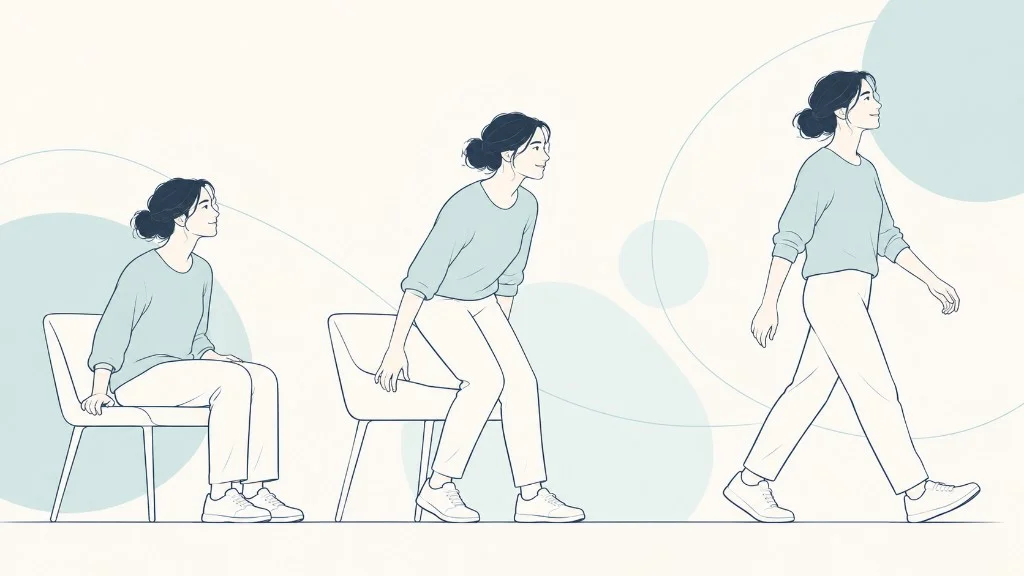
- Walking and basic movement. Short walks, and practice sitting and standing the way you were shown. Some surgeons use a brace. Not all do.
- Protected activity. Limits on bending, lifting, and twisting while bone is vulnerable. Feeling better does not cancel the limits.
- Therapy when your team starts it. Often somewhere from six weeks to three months. The protocol, the levels, and your health move that window.
- Return toward a usual routine. Work and recreation come back in layers. Solid bone is a later finding than the first good week.
AAOS describes the bone timeline as several months. Your discharge paper is the authority on your limits.
What AAOS actually puts on a timeline
AAOS OrthoInfo says it may take several months for the bone to become solid, although comfort often improves sooner. Early activity focuses on walking and on learning to sit, stand, and move safely. Some surgeons recommend a brace.
Physical therapy typically starts six weeks to three months later, varying with the procedure, the number of levels, your health, and the protocol. Complications such as blood clots and infection are most likely in the first few weeks. Moving too much before bone starts to fuse can contribute to pseudarthrosis, a failure of the level to become solid. Smoking raises the risk of poor bone healing, which is why stopping before surgery is a common request.
Those sentences are the timeline. They do not say you may golf at week eight or lift a child at week twelve. If a chart online assigns those dates, it invented them.
| Period | What is commonly emphasized | What varies |
|---|---|---|
| Hospital and first days | Walking, wound care, a pain plan | Approach, number of levels, other illnesses. Stays are longer than decompression alone |
| First weeks | Short walks. Watch the wound, the calves, and fever | Brace or no brace. How much help you need at home |
| About six weeks to three months | A common window for starting formal therapy | Your surgeon may start earlier or later. The written protocol wins |
| Several months | Bone becoming solid on the surgeon's assessment | Smoking, levels fused, and whether the level was protected |
Pain medicine without freelancing
AAOS describes pain control as often combining medicines so opioids can stay low, and it advises using as little opioid as possible for as short a time as possible. If you already take opioids, plan the regimen before surgery.
Anti-inflammatory drugs are the place people improvise, and they should not. A 2026 meta-analysis of ketorolac in 41,365 adults having spinal fusion found no overall link with nonunion for short courses at moderate doses. Courses longer than 48 hours, or a total above 240 mg, were associated with higher odds of nonunion.
That finding is about one strong NSAID around the operation. It is not a study of daily ibuprofen from the pharmacy. Do not add one because the incision aches. Ask.
What “I feel fine” is not allowed to mean
It is not allowed to mean the X-ray has already bridged, or that lifting limits were ceremonial. AAOS ties excess motion before fusion starts to the risk of pseudarthrosis. It also notes that most people lose some flexibility at the fused level, and that overall motion is usually not greatly limited when only a small segment is fused.
That depends on how many levels were treated. A one-level fusion and a long construct are different lives. How long the construct is meant to last as a solution, which is a different question from this healing window, is in How Long Does Lumbar Spinal Fusion Last?
In the Swedish stenosis trial, fusion hospital stays averaged 7.4 days versus 4.1 for decompression alone. MedlinePlus likewise treats added fusion as a longer recovery. Use those contrasts to set expectations, not to argue your way out of a limit.
The questions to prepare were for before the operation. After it, the paper in your hand is the timeline that knows your levels.
The first month at home
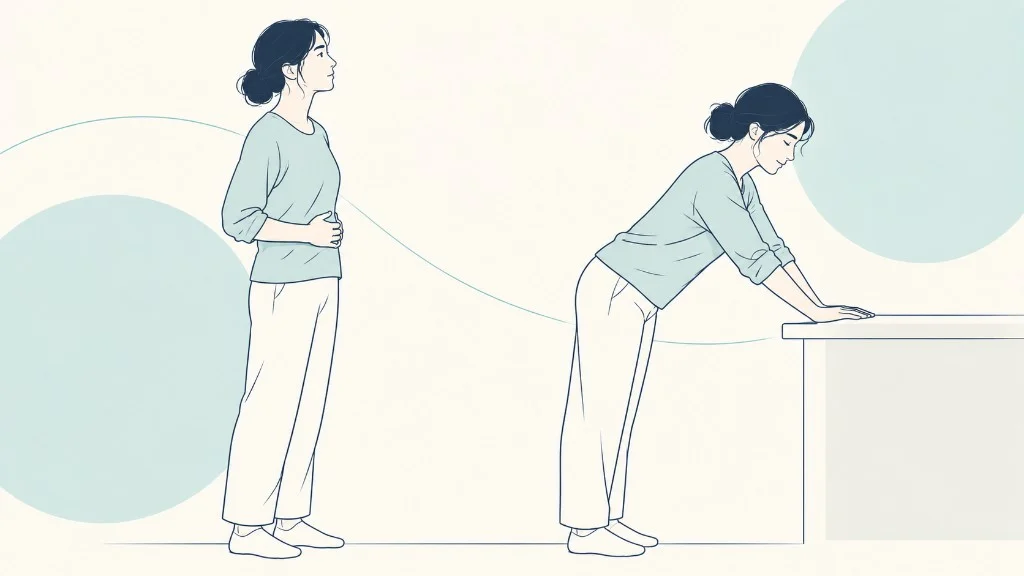
Plan the house for limited bending before you need it. A raised toilet seat, a chair with arms, and food at counter height are not luxuries if you cannot lean into a low cupboard. Someone should be able to drive you until you are cleared, which is a medicine question as much as a pain question.
Walk several short times a day rather than one long loop that you pay for at night. Log the walks if it helps you see progress. Do not log them to win.
Showering follows the wound instructions, not a blog’s day number. A dry dressing and a fever are not in the same category as stiffness when you stand up. Teach the person who lives with you the red flags: calf swelling, chest pain, a wound that opens or drains, confusion, or a new foot that will not lift.
Those calls happen the day they happen. They are not stored up for the six-week visit.
If a brace was prescribed, wear it on the schedule you were given and ask when it comes off. If it was not prescribed, do not buy one to feel safer. An unprescribed brace can change how you walk without protecting the fusion the way you imagine.
Safety here is the written limit plus the walks. It is not extra equipment.
When the months feel slow
Bone is slow on purpose. A good week six and a tired week ten are compatible with a fusion that is still knitting. What is not compatible is deciding the limits have expired because you slept well.
Ask, at the visit where films are checked, what the film is being asked to show and what activities change if it looks early. “You are healing” is not a lifting clearance. “You may lift X pounds” is.
Work should be staged in writing. Computer work, then standing, then loads. A note that says “no work for three months” or “back to full duty” without knowing your duty is a form letter.
Bring a one-line description of the heaviest thing you actually lift. The surgeon can respond to a fact. They cannot respond to “my job is physical.”
Smoking, if it is still happening, is the modifiable threat AAOS highlights for the bone clock. This is not a character lecture. It is the factor most under your control while the graft is trying to bridge.
If you stopped for surgery, the months afterward are part of the same request. The fusion’s chance to become solid is the thing that makes the later years boring, which is the result you want. Boring is unavailable if the level never unites and the hardware keeps working alone.
Travel, sleep, and sex are the questions people do not ask and then invent rules for. Ask them. A car ride may need stops so you are not locked in one posture.
Sleeping position follows comfort and the brace rules, not a single approved pose from the internet. Intimacy waits until the incision can tolerate it and you are not breaking the bending limit. None of these has a universal week. All of them have an answer from the person who did the operation.
Constipation from pain medicine is common enough to plan for, with the bowel regimen you were given, fluids, and walking. It is not a sign the fusion shifted. Ignoring it makes the early walks miserable.
Using a leftover anti-inflammatory to “get ahead of pain” is the improvisation the ketorolac data does not bless. Stay inside the plan.
When you return to the clinic, bring the walk log and the list of limits you are unsure about. Leave with either a continued limit or a new number. “Keep doing what you’re doing” is fine if what you are doing is clear.
If it is not, you are guessing with a healing bone, which is the one phase of this recovery where guessing is expensive. Later years can be looser. These months are the months the bone is actually deciding whether the operation becomes a permanent join or a hardware problem. Treat them as that decision, because that is what they are.
Nutrition and walking are the unfashionable supports for that decision. You do not need a special fusion diet. You need enough protein and calories to heal a wound, and you need the walks.
People who feel nauseated and eat almost nothing for two weeks are not failing a wellness trend. They should tell the team, because healing a bone on an empty intake is a harder job. The same call covers vomiting that will not stop, which can be a medicine problem or, after an abdominal approach, something the surgeon needs to know about the belly.
By three months, many people are in therapy and impatient. Impatience is not a complication. Breaking a lifting limit to prove impatience wrong can be.
Ask for the next allowed step in a unit you can obey: pounds, or “no lifting a grocery bag,” or “you may resume the stationary bike.” Vague encouragement feels kind and leaves you inventing. Specific permission is the recovery timeline, personalized at last.
Until you have it, the AAOS range, several months for bone, therapy often between six weeks and three months, is the only calendar honest enough to keep. Everything tighter than that is your paper, not the internet’s. Keep the paper where you will see it on a tired afternoon, which is when invented deadlines do the most harm.
The paper is allowed to be stricter than your mood. Mood is not the bone. Bending, lifting, and twisting are part of that paper, and they are discussed in Bending, Lifting, and Twisting After Lumbar Fusion.
Frequently asked questions
Why does my back still hurt if I am walking?
Because comfort and solid bone are different clocks. AAOS notes that comfort often improves before the fusion is solid, and that pain is a normal part of healing. Muscle pain from the approach and incision pain show up early. Bone is still being asked to grow for months. A walk that is a little longer each week is the right direction. New weakness, a fever, a draining wound, or a swollen calf is not ordinary healing. Those go to the surgical team. Soreness after a planned walk, which settles, usually does not.
When can I bend, lift, and drive?
There is no universal week. Many surgeons limit bending, lifting, and twisting while the graft is vulnerable, and AAOS notes that too much motion before bone starts to fuse can contribute to a failure of the fusion, called pseudarthrosis. Driving waits until you can brake safely and you are not on impairing medicines. A desk job returns sooner than a physical job. Your written limits beat any article, including this one. Ask which limits protect the wound and which protect the bone. They do not expire on the same day.
When does physical therapy start?
AAOS says therapy typically starts six weeks to three months after fusion, and that the timing depends on the procedure, how many levels were fused, your health, and the surgeon's protocol. Starting earlier because a decompression timeline said so can ignore fusion precautions. Starting late is not automatically a problem if you are walking and following the limits. The therapist needs the precautions in writing. The goal is walking, transfers, and a gradual return to your tasks, not a program that bends the fused level because a generic back class does.
Can I take ibuprofen for the pain?
Not on your own. Surgeons differ because anti-inflammatory drugs may affect bone healing, and the effect appears to depend on the drug, the dose, and how long it is used. A 2026 meta-analysis of ketorolac around the time of fusion found no overall increase in nonunion for short, moderate courses, and higher odds of nonunion when exposure ran past 48 hours or 240 mg total. That is one drug, in studies, not a permission slip for whatever is in the cabinet. Follow the plan you were given. Call before you add an over-the-counter anti-inflammatory.
How is this different from laminectomy recovery?
Decompression alone often sends people home the same day or within two days, with light work discussed around four weeks in general guidance. Fusion adds a bone-healing project measured in months, a longer hospital stay in the stenosis trials, and stricter protection of the level. You can feel better while the bone is still knitting. You should not treat that feeling as permission to lift. Read the decompression timeline only as a contrast. Do not borrow its dates.
Key takeaways
- Bone may take several months to become solid. Feeling better often happens sooner and does not prove the fusion is done.
- Early recovery is walking and movement limits. Therapy timing commonly falls between six weeks and three months and still varies.
- Do not add anti-inflammatory drugs unless the surgical team has already planned them.
- Wound, calf, and new nerve problems in the first weeks need a call, not a wait-and-see week number.
References
- Spinal Fusion. OrthoInfo, American Academy of Orthopaedic Surgeons.
- Ononogbu-Uche FC, Ahmed R, Giarola I, et al. Does perioperative ketorolac use impact union rate in spine surgery: a systematic review and meta-analysis. The Spine Journal. 2026;26(5):893-901. 2026.
- Laminectomy. MedlinePlus Medical Encyclopedia, U.S. National Library of Medicine. 2024.
- Försth P, Ólafsson G, Carlsson T, et al. A Randomized, Controlled Trial of Fusion Surgery for Lumbar Spinal Stenosis. The New England Journal of Medicine. 2016;374(15):1413-1423. 2016.
Prepare questions for your consultation
Organize your symptoms, imaging, and treatment history into clear questions for a spine specialist. The questionnaire does not decide candidacy.