A person finishes a long ride and then cannot cover the walk from the trailhead to the car without leaning on the bike. Another person, decades older, loses the same kind of walk and has not ridden anything in years. Both stories get called stenosis if a scan looks tight. The age, the sport, and the scan are three different facts, and only one of them is the symptoms.
Lumbar spinal stenosis is narrowing of the space that holds the spinal cord and the nerves, which can squeeze them. In active adults the narrowing has two common origins, and they do not announce themselves at the same time of life. What the person can still do on a bike, and what fails when they walk upright, is a clue about posture. It is not a diagnosis.
Two ages, two kinds of narrow canal
AAOS OrthoInfo separates a canal that was small from the start from a canal that narrowed with wear. Congenital stenosis means the canal was narrower than usual at birth. AAOS says this form usually first causes symptoms between the ages of 30 and 50, and that it occurs most often in men.
“Usually” and “most often” are doing real work. They are not a rule that every man in that age band has it, and they are not a rule that women do not.
The more common story is degenerative, meaning wear and tear. Stenosis of that kind happens most often in adults over 60, and AAOS says it affects men and women equally. An active 65-year-old is in the age group where this is most often seen.
Activity did not place them there. Age did. A person of the same age who does not train is in the same group. Hours on a bike do not move that description, and they do not spare anyone by effort.
The practical difference is when to take the possibility seriously, not how to name it from a hobby. Leg symptoms that build with upright walking in a man in his forties are not “too young” for a canal that was narrow from birth. The same symptoms in someone in their seventies are not dismissed as fitness, because degenerative stenosis is most often seen then.
In both cases the symptoms are still only a history. A 2022 review in JAMA describes clinical lumbar stenosis as back and leg pain brought on by extension and relieved by flexion, then confirmed with imaging. Extension is the upright arch.
Flexion is bending forward. The birthday does not replace either half of that sentence.
People in either group may or may not have back pain. Pressure on the nerves can cause burning pain, numbness, or tingling in the buttocks or legs. That pattern is sciatica.
Weakness, or a foot that slaps, can occur when the pressure is greater. Not everyone has weakness. An athlete who stops because of heavy legs, with ordinary strength and a quiet back, still has a story worth confirming. An athlete whose only complaint is next-day muscle soreness in the low back, with quiet legs, has a thinner one.
What the condition is, beyond this age split, is explained in What Is Lumbar Spinal Stenosis? Causes, Symptoms, and Diagnosis. This page stays with the active adult’s version of the same facts.
Wear on a scan is not the symptom
By age 50, AAOS says, up to 95 percent of people have some degenerative changes in the spine. That sentence is about how common worn discs and joints become. It is not a count of people who have stenosis symptoms, and it is not a count of people who need treatment.
An active adult who hears the figure after a scan can think it means almost everyone that age is injured. It does not. It says the pictures of aging are widespread. Symptoms are a separate question.
Imaging makes the same point from another study. In Framingham, narrowing was common and often had no symptoms. A fit person can have a crowded canal and a full training week.
Someone who is out of shape can have a roomy canal and a short walk from the hip or from fatigue. The scan does not know who finished the ride. Reading a post-season MRI, a picture of the canal and the nerves, as if fitness should have kept the canal wide mixes a training log with an anatomy finding. Reading the same picture as the explanation for every sore back in a runner makes the opposite mistake.
A scan ordered because a season ended, or because a friend had surgery, still has to meet the history. Clinical stenosis in the JAMA review starts with symptoms that upright postures provoke and flexion eases. A narrow report in a person who walks and trains without that pattern is the Framingham situation: anatomy without the syndrome.
A clear pattern in a person whose scan does not show a matching narrow level is not the syndrome either. The sport does not break that tie.
Why a bike can feel different from a walk
AAOS describes a contrast active people often notice before they have a name for it. Some people can ride a stationary bike, or walk while leaning on a shopping cart. Walking more than one or two blocks may bring on severe sciatica or weakness.
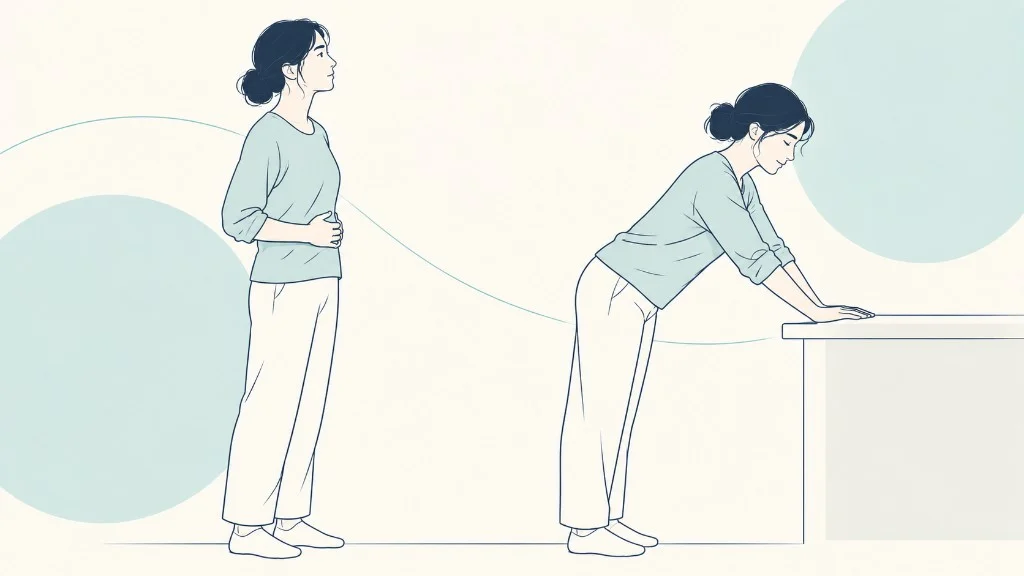
Leaning forward can increase the space available for the nerves. Standing straight or walking usually makes the pain worse. Sitting or leaning forward often makes it better.
A stationary bike is the example AAOS gives, because the rider is flexed and is not holding an upright lumbar arch. A road bike or a trail bike that also keeps the chest forward can feel similar for that same reason. The feeling is a posture clue.
It is not a study of cyclists, and it is not proof that the canal is narrow. If the bike is easy and the upright walk is not, write the contrast down. If the bike is also limited, write that down too. Either report can be true of a person who does not have stenosis.
Upright sports ask for the posture that tends to provoke symptoms when a canal is already tight. A run, a hike with a pack, a long stand on the sideline, or a walk across a course holds the spine extended. A person can be fit for a flexed sport and limited in those settings without being unfit.
The limit is specific. It is not a general failure of conditioning, and it is not, by itself, a narrow canal. How far that upright limit goes, and why the distance is a description rather than a grade, is covered in Walking Distance and Lumbar Spinal Stenosis: A Limit, Not a Grade.
The forward lean itself, including the shopping-cart version of the same idea, is discussed in Lower Back Pain That Improves When Leaning Forward: What It Suggests. For an active adult the lean may show up as aero bars, a cart in a hardware store, or hands on the knees at the end of a hill. The object changes. The question does not: did flexion ease the legs, or did any rest do about the same?
Posture and sport
Flexed effort and upright effort are different reports
The activity only helps if you say what the spine was doing.
Often easier to describe as flexion
- A stationary bike, the example AAOS names.
- A ride that keeps the chest forward.
- Walking while leaning on a cart or the bike.
- Sitting, which many people already use as a reset.
Often closer to upright extension
- Walking without a lean, including one or two blocks as a picture, not a cutoff.
- Standing on a sideline or in a line.
- Hiking or running with the trunk upright.
- Hills that change how much the lower back arches.
A difference between these lists is a clue. It is not a diagnosis, and it does not clear you.
The sport does not diagnose, and it does not clear you
Training load produces sore muscles. A hard week can leave the low back aching with quiet legs, and the ache can prefer a change of position. That pattern overlaps the weaker version of a stenosis story, the one that never involves the buttocks or the legs.
AAOS is explicit that people with stenosis may or may not have back pain. Back pain after a workout, by itself, is not the nerve pattern. Calling it stenosis because you are athletic, or because you are over 60, adds a label the soreness did not earn.
The hip is the other overlap in people who train. Groin pain, a stiff swing, or a limit that shows up when the hip has to turn can end a run or a hike while the canal is not the problem. The hip can also be present next to a narrow canal.
If the pain lives in the groin, say so, separately from buttock heaviness or calf symptoms. A sports story that only says “my back after I run” hides the split.
One leg does not settle it. Both legs are the usual picture when a tight canal limits walking. One leg can still be a nerve under pressure, a hip, or a single irritated root.
The side matters as a description. It does not award the diagnosis to the spine or take it away. Say which side, and say if a sloped path changes it. There is not a separate disease for people who train.
A good season does not rule the condition out. Symptoms can be absent for long stretches and then show up when walking is upright and prolonged. A bad season does not rule it in.
Illness, a change in shoes, a new hill, or a hip can shorten the same routes. The comparison that helps is repeated and specific: upright versus flexed, legs versus back only, one route versus another. A single race result is an anecdote. A month of the same contrast is a history.
| Fact | What it can suggest | What it does not show |
|---|---|---|
| Symptoms begin between 30 and 50, more often in men | A canal that was narrow from birth is the pattern AAOS describes for that age. | That this person has congenital stenosis, or that women cannot. |
| Age over 60 | Degenerative stenosis is most often seen in this group, in men and women equally. | That training caused it, or that an active person is protected. |
| The bike is easier than upright walking | Flexion may be giving a tight canal a little more room, as AAOS describes. | A diagnosis. The same contrast can be absent in stenosis, or present for another reason. |
| A narrow canal on MRI | Anatomy that might explain a matching leg story. | Symptoms. Narrowing on imaging is often present without them. Wear-and-tear changes by age 50 are even more widespread, and they are not stenosis. |
What to tell a clinician about training
Your age, and whether anyone has called the canal congenitally narrow, is context. It is not the diagnosis. A man of 42 and a woman of 68 can both have the walking pattern.
The first is in the age band AAOS gives for congenital stenosis, which occurs most often in men. The second is in the age band for the degenerative form, which affects men and women equally. Say the age. Let the symptoms do the rest.
What you can do flexed, and what you cannot do upright. Include the stationary bike if you have tried one. Include a cart or a lean on the bike if that is how you finish a walk.
Include the upright distance in ordinary language, and remember that one or two blocks is only the picture AAOS uses, not a line you must have crossed. If hills differ from flat ground, say which is harder. You do not have to explain the arch. You have to report it.
Where the symptoms go, and whether strength has changed. Buttock heaviness, numbness, a foot that slaps, groin pain, and a sore back with quiet legs are different lines. Not everyone with nerve pressure has weakness. If strength feels normal, that belongs in the note too.
What would take this out of a training conversation. AAOS describes cauda equina syndrome as rare: numbness in the private area, loss of bowel or bladder control, or legs that lose strength so walking fails. That needs prompt care. It is not a dramatic version of heavy legs on a long hike.
Nonsurgical care does not improve the narrowing, though many people report symptom relief. Surgery is generally reserved for poor quality of life from pain and weakness, including difficulty walking for extended periods. An active person’s goals, including a sport they want to keep, are part of quality of life.
They do not by themselves choose an operation, and a diagnosis does not dictate one. Whether an anti-inflammatory medicine is appropriate is a question for the treating clinician, with the stomach and kidney cautions AAOS notes. This page does not suggest starting or stopping a medicine.
A limit you can describe without blaming the sport
Stenosis in an active adult is still stenosis: a history of leg symptoms brought on by extension and eased by flexion, then matched to imaging. The congenital form usually shows itself earlier, between 30 and 50, and most often in men. The degenerative form is most often seen after 60, in men and women equally.
By 50, wear-and-tear changes on pictures are widespread and are not the syndrome. A narrow scan without the walking story is common enough that fitness does not turn it into a disease, and lack of fitness does not turn it into one either.
The bike is allowed to be easier than the walk. That contrast is a reason to describe posture, not a reason to diagnose yourself from the sport you chose, and not a reason to decide you are clear because the ride went well. Bring the contrast, the age, and the map of where the symptoms go.
The questions to prepare for a visit can hold that note. They do not score a sport, and they do not turn a narrow picture in a fit adult into a plan.
Frequently asked questions
I am under 50 and still training. Can this be stenosis?
Age makes one pattern more common than another. It does not issue a diagnosis. A canal that was narrow from birth usually first causes symptoms between 30 and 50, more often in men. Wear-and-tear stenosis is most often seen after 60. An active adult in either age band can have leg symptoms from a tight canal, from a hip, or from training load. The sport and the birthday do not choose among those. The history has to, and then imaging has to match it.
If I can finish a long ride, are my legs clear?
A long ride does not clear the canal, and it does not prove a problem either. A bike holds the lower back flexed. Upright walking holds it extended. The American Academy of Orthopaedic Surgeons notes that some people with stenosis can ride a stationary bike even when walking brings on leg pain or weakness. If the ride is easy and the sidewalk is not, that contrast belongs in the history. If both are hard, say that too. Fitness on the bike is not a nerve exam.
Do worn discs on a scan after age 50 mean I have stenosis?
No. By age 50, up to 95 percent of people have some degenerative, or wear-and-tear, changes in the spine. AAOS treats that figure as a statement about aging, not as a statement about stenosis symptoms. Narrowing on imaging is also common in people who have no symptoms. A scan after a season, or after a birthday, still needs a matching story: leg symptoms brought on by upright activity and eased by sitting or leaning forward. The picture alone is not the syndrome.
Should I stop my sport until I have a scan?
This page cannot set your training. What it can say is that the sport is not the diagnosis and is not the treatment plan. A clinician who knows the symptoms can help you decide what to keep doing while the story is sorted. New numbness in the private area, new trouble with bladder or bowel control, or legs that suddenly will not support you are not training questions. Those need prompt care. Ordinary next-day soreness is a different report and should be described as soreness, not as an emergency.
Does stenosis in an active adult automatically mean surgery?
No. A diagnosis does not dictate a procedure. AAOS generally reserves surgery for poor quality of life from pain and weakness, including difficulty walking for extended periods. Many people report symptom relief from nonsurgical care even though that care does not open the canal. An athlete's goals matter in that conversation. They do not create an indication by themselves, and they do not erase weakness or a walking limit. The exam and the images still have to fit the history.
Key takeaways
- Congenital stenosis, a canal narrow from birth, usually first causes symptoms between ages 30 and 50 and occurs most often in men. Degenerative stenosis is most often a condition of adults over 60 and affects men and women equally.
- By age 50, up to 95 percent of people have some wear-and-tear changes in the spine. That is not the same as having stenosis symptoms.
- A bike keeps the spine flexed and may feel easier than upright walking. The difference is a clue about posture. It does not diagnose stenosis, and a hard ride does not rule it out.
- A narrow scan in a fit adult is still a scan. Symptoms, not the sport and not the picture alone, are what make it a clinical problem.
References
- Lumbar Spinal Stenosis. OrthoInfo, American Academy of Orthopaedic Surgeons.
- Katz JN, Zimmerman ZE, Mass H, Makhni MC. Diagnosis and Management of Lumbar Spinal Stenosis: A Review. JAMA. 2022;327(17):1688-1699. 2022.
- Kalichman L, Cole R, Kim DH, et al. Spinal stenosis prevalence and association with symptoms: the Framingham Study. The Spine Journal. 2009. 2009.
Prepare questions for your consultation
Organize your symptoms, imaging, and treatment history into clear questions for a spine specialist. The questionnaire does not decide candidacy.