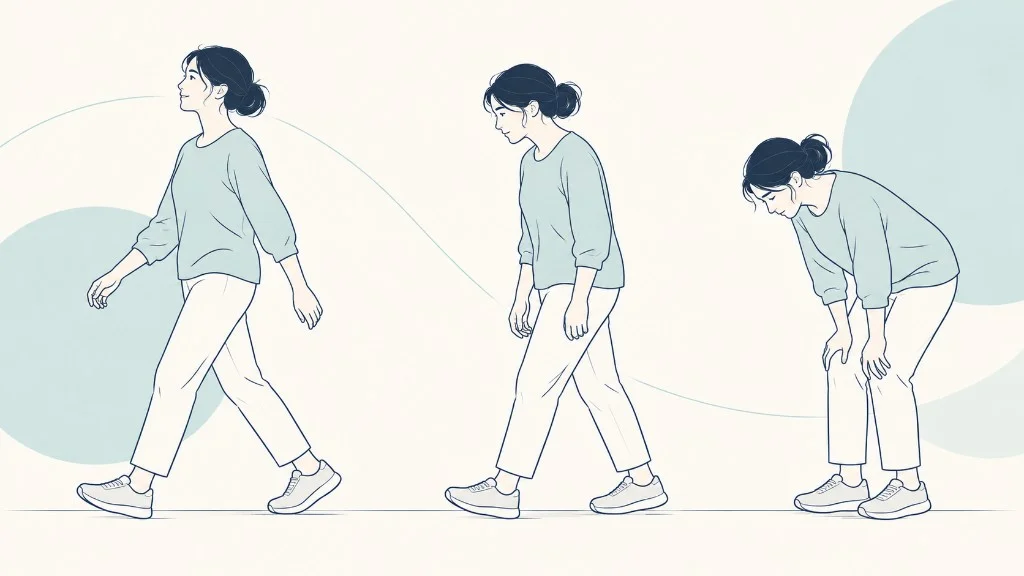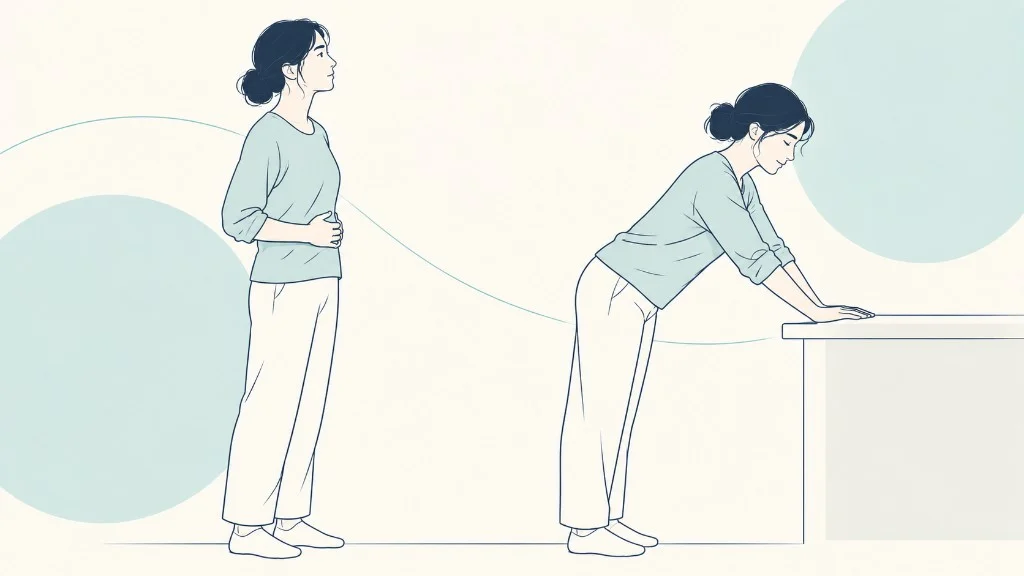
Many people notice this pattern in an ordinary errand. The legs grow heavy in a store aisle. Leaning on the cart makes the next aisle possible.
Standing upright at the counter brings the heaviness back. Sitting in the car settles it. The relief is worth describing. It is easy to treat as a diagnosis, and it is not one.
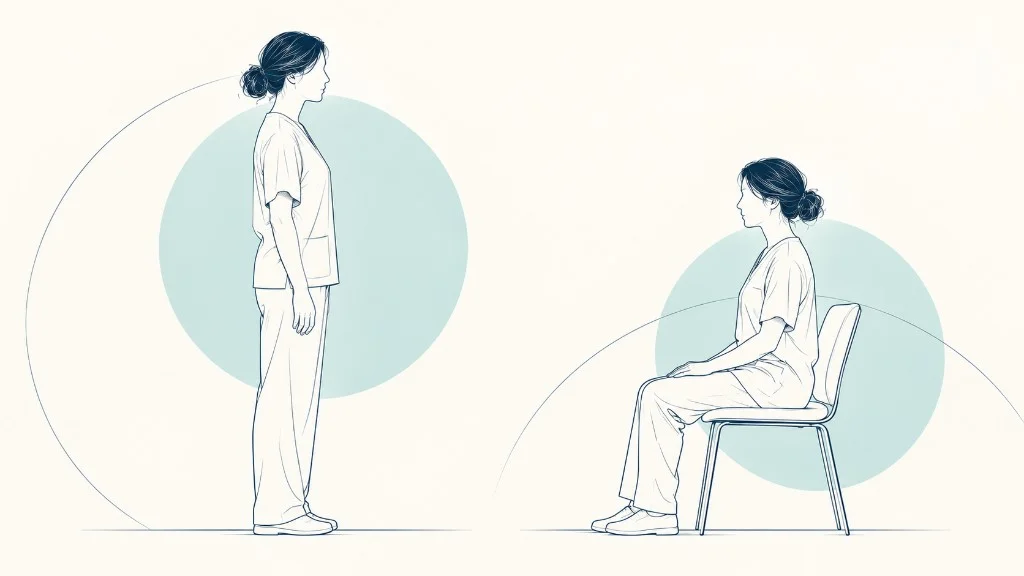
Leaning forward is a clue about how symptoms behave. A 2022 review in JAMA describes clinical lumbar stenosis as a history of back and leg pain provoked by extension and relieved by flexion, then confirmed with imaging. Flexion is the forward bend.
Extension is the upright arch. The posture is the first half of that sentence. Confirmation is the second half.
This article stays on the clue. How standing and sitting compare, including the hip and blood-flow lookalikes, is covered in Lower Back Pain When Standing vs. Sitting.
What relief from leaning forward actually includes
The useful version of the pattern has several parts, and they belong together.
Something brings the symptoms on. Usually that is standing upright or walking. Something turns them down.
Usually that is sitting, bending at the waist, or resting the forearms on a cart. The symptoms are not only a sore patch in the back. They often include heaviness, aching, numbness, or weakness in the buttocks or legs.
AAOS OrthoInfo describes the pattern in plain language. People with spinal stenosis often feel better when they lean forward or sit. Standing up straight or walking usually makes the pain worse.
Studies of the lumbar spine, the page notes, show that leaning forward can increase the space available for the nerves. Some people can ride a stationary bike, or walk while leaning on a shopping cart. Walking more than one or two blocks may bring on severe sciatica or weakness.
Those sentences are a picture of a limit. They are not a distance you pass or fail, and they are not proof by themselves.
Back pain that eases when you bend over a sink, with no leg symptom, is a thinner clue. AAOS says people with stenosis may or may not have back pain, depending on the arthritis that has developed. Leg symptoms that change with the same posture are the part that points toward the nerves.
The timing matters as much as the posture. Symptoms that build over minutes of walking and ease over minutes of sitting are a different report from an ache that appears at the end of a long day and lingers through the evening. A limit that is similar from week to week is easier to interpret than a single bad afternoon.
None of that timing confirms a narrow canal. It makes the history something a clinician can test.
Symptom pattern
A forward lean is a clue with two readings
Relief in flexion can fit a tight canal, or a back that simply prefers not to arch.
Closer to a nerve-space story
- Upright standing or walking brings on leg heaviness, numbness, or weakness.
- Sitting, or leaning on a cart, eases the legs.
- A stationary bike may be easier than walking the same effort.
- Standing still and fully upright often does not reset the legs.
A weaker or different clue
- The ache stays in the back or the upper buttock.
- The legs are not heavy, numb, or weak.
- Any change of position helps about the same amount.
- Standing still is enough, and leaning adds nothing.
The lean suggests where to look. It does not name the condition.
Why flexion is part of the stenosis story
In a canal that is already tight, extension can leave less room for the nerves, and flexion can leave a little more. That is the mechanical reason a cart becomes part of the history. AAOS states the space point directly.
It is an explanation of a familiar posture. It is not a finding you can feel from the inside, and it is not present in every person who likes to lean.
The walking form of this problem is often called neurogenic claudication. The legs ache, feel heavy, tingle, or weaken while you walk or stand, and flexion eases them. Katz and colleagues treat that history as the start of a stenosis diagnosis, not the finish.
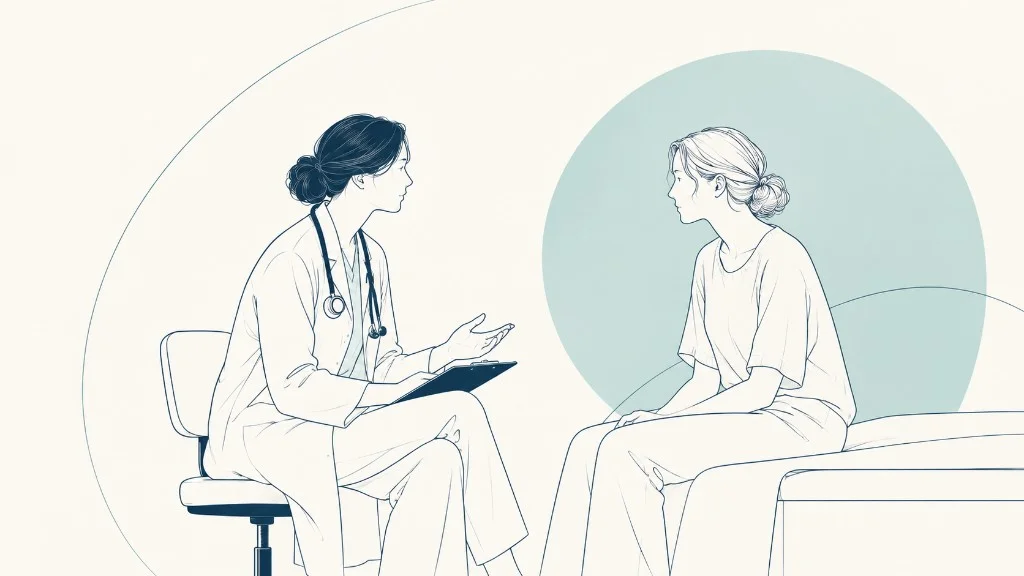
Imaging, usually MRI, is how a clinician checks whether a narrow level could explain the story. The examination sits between the two. AAOS describes looking at the back, pressing on tender spots, and asking you to bend forward, backward, and to the side. The lean you discovered in a store is then checked in the room, not accepted as a label.
A narrow canal on a scan, without the story, is a different finding. In a Framingham imaging study, narrowing was common and often had no symptoms. The picture and the posture clue have to be read together.
A comfortable walker with a crowded scan does not have this pattern. A person with the pattern and a scan that does not match it does not have the diagnosis either. Symptoms are not the scan, and the scan is not the symptoms.
What the canal is, and how narrowing develops, is explained in What Is Lumbar Spinal Stenosis?. This page does not repeat that overview.
Stenosis is most often a condition of adults over 60, in the AAOS description, but the clue is not reserved for that age. A smaller canal from birth can show symptoms earlier. AAOS says those symptoms are usually first noticed between the ages of 30 and 50, and that this congenital form occurs most often in men.
The forward lean can appear in either group. Age changes how common the condition is. It does not turn the posture into a diagnosis.
When the pattern fits, and when it only rhymes
A closer fit is repetitive. One or both legs grow heavy after a fairly steady amount of walking. A cart, a walker, or a stationary bike lets you continue.
Sitting for a few minutes resets the legs. Standing still, fully upright, does not. The back may ache.
The reason you stop walking is the legs. Pain may stay in the buttock, or it may burn toward the foot. AAOS describes that spread as sciatica from pressure on the nerves, sometimes with numbness, and in some people with weakness or a foot that slaps the ground.
A looser fit is common and should stay looser. The back aches after you stand at a counter, leaning on the counter helps, and the legs stay normal. Joints at the back of the spine take more load in extension.
Tired muscles ache after a long stand and prefer a change of position. Either can look like the stenosis story if the only question is “does bending help?” The better question is where the symptoms go, and whether walking, not just standing still, is what brings them on.
One-sided pain can still be a nerve under pressure. It can also be a single joint, a hip, or a disc irritating one root. The lean does not sort those.
Both legs are the textbook picture of neurogenic claudication. One leg does not erase the clue, and it does not confirm it.
Other limits on walking should not be folded into this posture. A calf cramp that stops when you simply stand still, without sitting or leaning, raises a question about blood flow. Groin pain and stiffness when the hip turns raise a question about the hip.
Both can exist next to a spine problem. The standing-versus-sitting article is the place for that comparison. Use this page for the forward lean itself.
Some symptoms are not a pattern to watch through another week of errands. AAOS describes cauda equina syndrome as rare and urgent: numbness in the private area, loss of bowel or bladder control, and legs that lose strength so that walking fails. That cluster needs emergency care. It is not a variant of feeling better on a cart.
| Piece of the story | What it can suggest | What it does not show |
|---|---|---|
| Easier on a cart or a stationary bike | Flexion may be giving a tight canal a little more room. | That the canal is narrow, or that it is the cause of today's pain. |
| Upright walking brings on leg symptoms | A history that fits neurogenic claudication. | Which level is narrow, or whether the hip or the arteries are involved. |
| Back pain eases when you bend, legs quiet | A posture preference that muscles or joints can share. | A stenosis diagnosis. |
| MRI shows a narrow canal | A finding that might explain a matching history. | Symptoms. Narrowing on imaging is common in people without them. |
What the clue does not forecast
A recognizable pattern can still follow more than one course. In natural history series summarized in the JAMA review, over periods of up to three years, roughly a third of people improved, about half stayed about the same, and roughly 10 to 20 percent worsened. The review is describing groups of people with lumbar stenosis, not a promise about next month’s walk. The time window is “up to three years,” not a result measured at the same moment for everyone.
Those figures argue against two casual stories. One is that flexion relief means you are already on a steep decline. The other is that the pattern always fades if you wait.
Neither story is what the series showed. Improvement in a series also does not mean the canal widened. Symptoms can change while the anatomy stays tight. Worsening does not, by itself, tell you which treatment would change the course.
The same review keeps the order straight. History first. Imaging second, to confirm.
A scan ordered because a friend felt better on a cart, without a matching leg story, is how asymptomatic narrowing gets treated as if it were the syndrome. A clear leg story that never gets examined is the opposite mistake. The clue is an invitation to sort the cause. It is not a forecast and not a plan.
How a clinician puts the history, the examination, and the scan in that order is the subject of How Lumbar Spinal Stenosis Is Diagnosed. When the limit is a distance you can walk, how that distance is used in clinic and in trials is covered in Walking Distance and Lumbar Spinal Stenosis.
How to describe the pattern so it can be used
Four lines are enough, if they are specific.
What you were doing when the symptoms started. Standing at a sink, walking a dog, or waiting in a line is more useful than “it happens sometimes.” If hills feel different from flat ground, say which direction is harder.
Uphill and downhill change how much the lower back extends. You do not have to decide what that means. You have to report it.
Where the symptoms go. An ache across the low back is different from heaviness that reaches the calves. Numbness in a foot is different from both.
Weakness, or a foot that slaps, is different again, and AAOS treats weakness as a later step of nerve pressure, not as a required feature. Many people have the walking pattern with strength that is normal on the day of the exam. Say what you notice, including what you do not notice.
What turns the symptoms down, and how long that takes. Leaning on a cart and feeling the legs ease is a clearer report than “moving around helps.” If you need to sit, say so.
If standing still is enough, say that too. The difference steers the visit toward the canal or toward blood flow. Mention a stationary bike if it is easier than walking, because AAOS treats that contrast as part of the story people with stenosis often recognize.
What would make you stop watching the pattern at home. New saddle numbness, new trouble controlling bladder or bowel, or legs that suddenly will not carry you are emergency symptoms, not diary entries. New weakness that is clearly worse than last week belongs in a prompt call even when it is not that cluster.
Bring the note to the visit. A clinician can then decide whether the story is strong enough to confirm with imaging, or whether the hip, the pulses, or a simpler muscle problem should be examined first. The questions to prepare are a way to hold that note. They do not turn a shopping-cart habit into a procedure, and they do not score the lean.
A clue you can trust without over-trusting
Relief when you lean forward matches the way a tight canal behaves when the lower back extends and then flexes. That is why the pattern earns a place in the history. It does not earn a diagnosis on its own.
Muscles and joints can prefer the same posture. A scan can show narrowing in a person who walks without limit. Over a few years, people with the clinical syndrome improve, stay the same, or worsen, in proportions that do not belong to any one person in advance.
The honest use of the clue is narrow. It tells you what to describe, what else has to be considered, and when the story is complete enough to put next to an image. If the legs are quiet, say that, and let the back pain be investigated as back pain.
If the legs are the reason you stop, say that, and let the confirmation step happen in order. The cart is information. It is not the name of the disease.
Frequently asked questions
Does relief when I lean forward mean I have spinal stenosis?
No. Leaning forward is a clue, not a diagnosis. Lumbar spinal stenosis becomes a clinical diagnosis when back and leg pain are provoked by extension, relieved by flexion, and then matched to imaging. Muscles and facet joints can prefer the same posture, especially when the legs are not involved.
Why does a shopping cart make walking easier?
Leaning on a cart flexes the lower back. In a canal that is already tight, that position can leave a little more room for the nerves. The American Academy of Orthopaedic Surgeons describes the cart, and a stationary bike, as familiar examples. Being able to use a cart does not prove the canal is narrow, and being unable to use one does not clear you.
Is back pain that eases when I bend over the same clue?
It is a weaker one. The pattern that points toward the nerves usually includes heaviness, aching, numbness, or weakness in the buttocks or legs, brought on by upright standing or walking. Back pain alone can come from joints or tired muscles. People with stenosis may or may not have much back pain.
If this pattern is stenosis, will it keep getting worse?
Not on a schedule. In natural history series reviewed in JAMA, over periods of up to three years, roughly a third of people improved, about half stayed about the same, and roughly 10 to 20 percent worsened. Those are group findings. They do not assign you a share of that range, and they do not replace an examination.
What should I write down before an appointment?
Note what you were doing when symptoms started, where they travel, what eases them, and whether you must sit or lean rather than simply stand still. Mention a stationary bike if it feels easier than walking. Add any new weakness or any change in bladder or bowel control. A short written note is more useful than the word severe.
Key takeaways
- Relief when you lean forward is a flexion clue. It suggests lumbar stenosis only when upright standing or walking brings on leg symptoms and imaging later matches that story.
- A shopping cart or a stationary bike can make the same walk easier because flexion may open a tight canal a little. The posture is still not a diagnosis.
- Back pain that eases with bending, without leg symptoms, is less specific and can come from joints or muscles.
- Across natural history series lasting up to three years, roughly a third improved, about half were unchanged, and roughly 10 to 20 percent worsened. That is not a personal forecast.
References
- Katz JN, Zimmerman ZE, Mass H, Makhni MC. Diagnosis and Management of Lumbar Spinal Stenosis: A Review. JAMA. 2022;327(17):1688-1699. 2022.
- Lumbar Spinal Stenosis. OrthoInfo, American Academy of Orthopaedic Surgeons.
- Kalichman L, Cole R, Kim DH, et al. Spinal stenosis prevalence and association with symptoms: the Framingham Study. The Spine Journal. 2009. 2009.
Prepare questions for your consultation
Organize your symptoms, imaging, and treatment history into clear questions for a spine specialist. The questionnaire does not decide candidacy.