A crack in a small bone bridge and worn joints are not the same reason for a vertebra to shift. One story belongs most often to children, teenagers, and adults who have lived with that crack. The other belongs most often to older adults, frequently next to a narrow canal. Age suggests which story to ask about, but imaging and the history decide.
Age does not assign the type
Spondylolisthesis means one vertebra, a bone of the spine, has shifted forward on the vertebra below it. The name describes position. It does not, by itself, prove pain, prove that the level is unstable, or justify fusion. Fusion is an operation that connects bones so that segment no longer moves.
The split that matters is the cause. An isthmic slip follows a separation in the pars, a thin bridge of bone at the back of the vertebra. A degenerative slip follows wear in the disc, the cushion between the vertebrae, and in the facet joints, the small paired joints at the back of the spine.
Those are different problems. A birthday does not choose between them.
Age still shapes the first question. The American Academy of Orthopaedic Surgeons writes its page on spondylolysis and spondylolisthesis for the pars picture in children and adolescents. Advice on that page should not be treated as the pathway for an older adult with a degenerative slip.
The reverse mistake is easy too. An older adult can carry a pars defect that started years earlier. A younger person is not isthmic by age if the images show worn joints instead of a separated bridge.
Many people in either group have no symptoms. The academy notes that the finding may appear on an X-ray taken for something else. A line on a report has not yet explained anyone’s pain.
Two problems
Same word, different bone
Age makes one column more likely. The images and the story decide.
Pars and isthmic slip
- A stress fracture or weakness in a small bone bridge.
- In youth, a slip most often appears during rapid growth.
- Activity-related back pain is the common symptom when there is one.
- The academy page is about this pathway, not about adult stenosis trials.
Degenerative slip
- Follows worn discs and facet joints.
- Often discussed with a narrow canal in older adults.
- Adult trials studied stenosis, not a child's pars crack.
- The film is still not pain, and not an operation.
The graphic separates the pathways. It does not assign a person to either one by age.
Adult research on fusion sits on the other side of this line. It should not be borrowed for a growing athlete. Försth and colleagues studied adults with lumbar spinal stenosis, narrowing around the nerves in the lower back.
The trial included people with a degenerative slip and people without one. Ghogawala and colleagues studied a smaller group of adults with grade I degenerative spondylolisthesis and lumbar stenosis. Grade I is that trial’s name for a smaller slip. Neither study enrolled children with a pars stress fracture.
A side-view film shows position, not whether the bone moves when someone bends. The word slip does not mean unstable. Terms are covered in What Is Spondylolisthesis?. The two causes are compared in Degenerative vs. Isthmic Spondylolisthesis.
The pars crack and the isthmic slip
Spondylolysis is a weakness or stress fracture in the pars interarticularis. That bridge sits between the upper and lower facet joints. The academy says it can occur in up to 5 percent of children, as young as age 6, with no known injury. That figure is about the crack in children. It is not a rate of pain, not a rate of slippage, and not a description of degenerative slips in older adults.
Repeated extension can contribute. Extension means bending the lower back backward. The academy names gymnastics, football, and weightlifting as examples of that repeated stress.
It also says the crack can occur without sports. A child who does not compete can still have a pars defect. A child who does compete has not automatically injured the pars because the sport is on a list.
The bridge is most often in the fifth lumbar vertebra, the lowest bone of the lower back, and sometimes in the fourth. It may be on one side or on both. In this setting, spondylolisthesis is the forward shift after the pars separates. In children and adolescents, that slippage most often occurs during rapid growth, the years when the spine is lengthening quickly.
The crack can exist without the shift. The page does not treat every crack as a slip that must advance. An adult can still have this type if the defect started during growth and was named years later.
Adult age does not convert an old pars defect into a degenerative slip. The images have to show a separated pars, or worn discs and joints.
When pain is present, it may feel like a muscle strain. That is why activity-related pain that keeps returning in a growing athlete deserves an examination. It is not a reason to call every sore back a fracture.
The degenerative slip in older adults
A degenerative slip is the shift that becomes possible when the disc and the facet joints have worn. The vertebra can then move forward on the one below. This is the picture usually meant when spondylolisthesis comes up in an older adult.
It is often discussed with lumbar stenosis. The symptoms that bring people in are often about how far they can stand or walk, not about one sports motion.
That pairing is the population of the adult trials. It is a different population from a teenager in a growth spurt. Försth’s trial compared decompression plus fusion with decompression alone.
Decompression opens space around the nerves. The people in the trial had lumbar stenosis. Some also had a degenerative slip and some did not.
At 2 years, the Oswestry Disability Index did not differ significantly between the groups. That index is a questionnaire about how back problems limit everyday activities. Fusion meant a longer operation, more bleeding, and a higher cost.
Ghogawala’s trial was smaller and more specific. Everyone in it had grade I degenerative spondylolisthesis and lumbar stenosis. Adding instrumented fusion, fusion held with implants such as screws and rods, was associated with a larger improvement on the SF-36 physical-component summary at 2 years.
That summary is a questionnaire score for physical health and day-to-day function. The Oswestry Disability Index did not differ significantly. Reoperation over 4 years was less common in the fusion group.
Fusion again involved more blood loss and a longer operation. The trial studied grade I degenerative slips in adults. It did not study adolescent pars fractures.
No figure here says how common a degenerative slip is. A scan can show one in a person who walks without limit, and in a person who must sit after a short distance. The trials enrolled adults who already had stenosis, not every older adult with a line on a scan, and they did not study a child’s pars fracture. How a slip and a narrow canal can sit together is covered in Spondylolisthesis and Spinal Stenosis Together.
What symptoms can look like
The academy’s symptom description is written for the pars and slip page. That includes adults whose problem is still that pathway. Many people have no symptoms at all.
When symptoms occur, low back pain is the common one. It may feel like a muscle strain. It may spread into the buttocks and the back of the thighs. It may worsen with activity and ease with rest.
If the vertebra has slipped, muscle spasm may add stiffness, tight hamstrings, and trouble standing and walking. Hamstrings are the muscles along the back of the thigh. Spasm means muscles tighten and guard.
Severe slips, and high-grade slips, may cause tingling, numbness, or weakness from pressure on a nerve root. A nerve root is a nerve leaving the spine toward the buttock and the leg.
The academy defines high grade as a slip of more than 50 percent of the width of the vertebra. It says high-grade slips are more likely to cause significant pain and nerve injury, and more likely to be considered for surgery. More likely is not the same as certain.
A smaller slip is not a promise that the week will be comfortable. A larger slip is not, by itself, an operation.
Those sentences should not be copied onto every older adult as the whole story. The adult trials studied lumbar stenosis, and only Ghogawala required a degenerative slip. Leg symptoms with walking can belong to that picture.
They can also come from a hip or from blood flow. Naming the slip does not finish that sorting.
| Question | Pars or isthmic slip | Degenerative slip |
|---|---|---|
| Who is usually in the story | Children, adolescents, and adults who have a pars defect. | Older adults, often when a narrow canal is also being discussed. |
| What the bone shows | A weakness or stress fracture in the pars, then a shift if the vertebra moves. | Wear in the disc and facet joints that allows a shift. |
| Where the main sources sit | The academy page on spondylolysis and spondylolisthesis. | Adult trials of stenosis, one of them limited to grade I degenerative slips. |
| What the film does not decide | Pain, instability, or the need for fusion. | Pain, instability, or the need for fusion. |
A high-grade measurement is distance on a film. In the academy’s words it makes significant pain, nerve injury, and a surgical discussion more likely. It is still one fact, beside symptoms, change over time, and what nonsurgical care has already been tried.
Why the care pathways do not swap
For most patients with spondylolysis and low-grade spondylolisthesis, the academy says pain improves with nonsurgical care. Low-grade, on that page, is the contrast with high-grade slips of more than half the vertebral width. The care listed includes rest from the activity that stresses the back, anti-inflammatory medicine, and physical therapy for flexibility, the hamstrings, and trunk strength.
The academy lists those medicines. Whether one is appropriate is a clinician’s decision for a particular person. Nothing here is an instruction to start a medicine or to stop one.
A brace belongs to a narrower part of that same pars pathway. Some patients wear one to limit motion so a recent pars fracture might heal. Athletes with sudden pain are the people the academy describes as candidates.
People with longer-term pain are not described the same way. The fracture then has a low chance of healing even after several months in a brace. That sentence is about a recent crack. It is not a plan for an older adult whose slip comes from worn discs and facets.
The pediatric page does not establish bracing for a degenerative slip, and the stenosis trials did not test a brace. A brace story from a growing athlete and an operation studied in adults with stenosis answer different questions.
Surgery, on the academy page, may be discussed for severe or high-grade slippage, slippage that is getting worse, nerve compression with radiating pain or weakness, or back pain that did not improve after nonsurgical care. Those reasons belong to the pars and isthmic picture. They are not a checklist that turns an incidental slip into an operation, and they are not the findings of the adult trials.
Fusion is the operation most often used when surgery is done for that picture. The surgeon may realign the bone, add bone graft, and use screws and rods. Pars repair is an alternative in less severe slippage: the fractured bridge is fixed, and the neighboring joints can still move.
It needs a fractured pars. Neither operation is what the adult trials tested. Those results stay with adults who had stenosis.
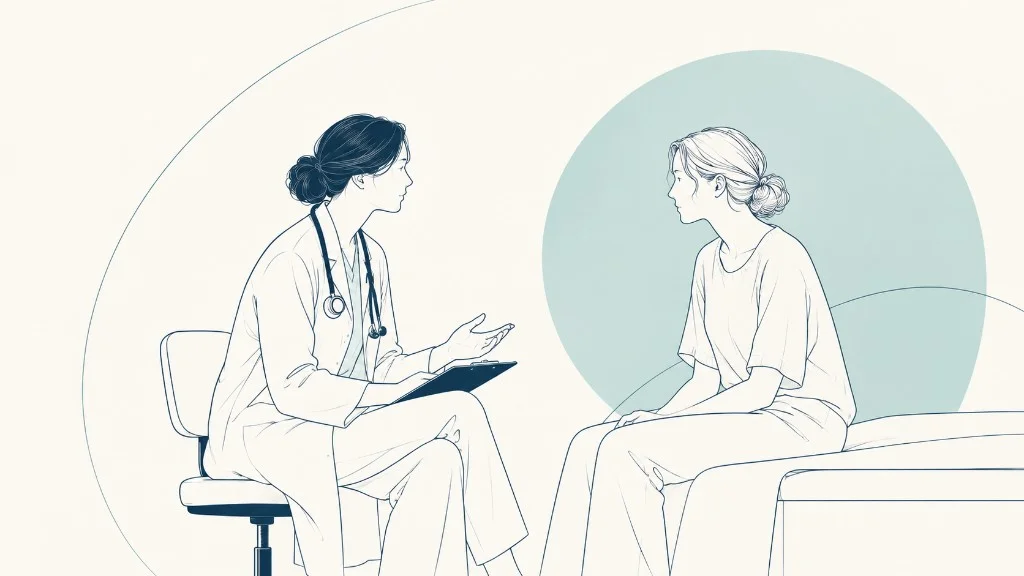
What to clarify at a visit
Four questions keep the pathways from being mixed in the room.
What do the images show at the pars? A separated bridge points toward spondylolysis and, if the vertebra has shifted, an isthmic slip. That can be true in a teenager or in an older adult.
Worn discs and facet joints without that separation point toward a degenerative slip. If the pictures are unclear, the next step is a better look at the bone or the nerves, not a guess from age.
What symptoms are present? Activity-related back pain, sometimes with tight hamstrings, matches the academy’s description of a symptomatic slip. A walking limit from leg symptoms matches the stenosis picture the adult trials enrolled.
No symptoms means the finding may be incidental, found while looking for something else. In a growing child it can be watched with later films. It does not have to be treated as the cause of a different pain.
Is the person still growing, or still in a sport that repeatedly extends the back? Those questions belong to the pars pathway. They are the wrong lead questions for an older adult whose discs and facets have worn.
Nonsurgical care is the academy’s usual start for spondylolysis and low-grade slips. A proposal to add fusion for an older adult with stenosis is the argument the two trials had, and they did not emphasize the same result. A set of questions that keeps a finding apart from a treatment can hold that distinction. The list does not turn a slip into a procedure.
Two people can leave with the same word and different jobs. One may need a clear look at a pars crack during growth. The other may need the stenosis story matched to the slip, or nothing but a correct label. The useful visit names the type and refuses to treat age as the diagnosis.
Frequently asked questions
Can an older adult still have a pars defect from youth?
Yes. The academy describes the crack in children as young as age 6, and says slippage in that pathway most often happens during rapid growth. The defect does not become a degenerative slip on a birthday. Degenerative means the disc and the facet joints have worn. Isthmic means the vertebra shifted after the pars separated. An adult can have either pattern, and some reports never say which. Ask what the images show at the pars. Age can suggest the question. It should not be allowed to answer it.
If a child has a pars crack, has the bone already slipped?
Not necessarily. Spondylolysis is the crack, or the weak bridge. Spondylolisthesis is the forward shift after the pars separates. The academy discusses both, and a crack can be present without a slip. In children and adolescents the slip, when it happens, most often happens during rapid growth. That is why later X-rays are used to see whether position is changing. A crack on a first film is a finding to name correctly. It is not a slip that has already occurred, and it is not a plan for fusion.
Do the adult fusion trials apply to a teenage athlete?
They do not. Försth studied adults with lumbar stenosis, some with a degenerative slip and some without one. Ghogawala studied adults with grade I degenerative spondylolisthesis and stenosis. Both trials compared adding fusion to an operation that opens space around the nerves. A teenager with a pars stress fracture is outside those groups. The academy page on spondylolysis and spondylolisthesis is the one written for that younger pathway. Using either source for the other group mixes two problems that share a word.
If there is no pain, can the finding be left alone?
Often it is recorded rather than treated. The academy says many people have no symptoms, and that the finding may show up on an X-ray done for something else. No pain means the image has not explained a symptom. In a child who is still growing, later films are how clinicians check whether the vertebra is changing position. A painless film is not a reason for fusion. If activity-related pain, tight hamstrings, or trouble walking show up later, those symptoms need their own exam. They are not proof the old film was an emergency that was missed.
Why do tight hamstrings come up with a slip?
The academy includes tight hamstrings, with muscle spasm, stiffness, and trouble standing and walking, when a slip is causing symptoms. The muscles along the back of the thigh feel short, and bending or walking may show it. Tight hamstrings are not a diagnosis. People have them without any slip. They become useful when they sit next to activity-related back pain and a film that shows a shift. They do not measure the grade, and stretching them is not described as a way to move the vertebra back into place.
Key takeaways
- A pars or isthmic slip and a degenerative slip are different problems. Age suggests which story to ask about. Imaging and the history decide.
- The academy says spondylolysis can occur in up to 5 percent of children as young as age 6. That figure is not a pain rate and not a rate of degenerative slip.
- Many people have no symptoms. A slip on a scan is not automatically painful, unstable, or a reason for fusion.
- The academy's page is about the pars pathway, mostly in young people. Adult stenosis trials study a different group, and the two should not be swapped.
References
- Spondylolysis and Spondylolisthesis. OrthoInfo, American Academy of Orthopaedic Surgeons.
- Försth P, et al. A Randomized, Controlled Trial of Fusion Surgery for Lumbar Spinal Stenosis. New England Journal of Medicine. 2016.
- Ghogawala Z, et al. Laminectomy plus Fusion versus Laminectomy Alone for Lumbar Spondylolisthesis. New England Journal of Medicine. 2016.
Prepare questions for your consultation
Organize your symptoms, imaging, and treatment history into clear questions for a spine specialist. The questionnaire does not decide candidacy.