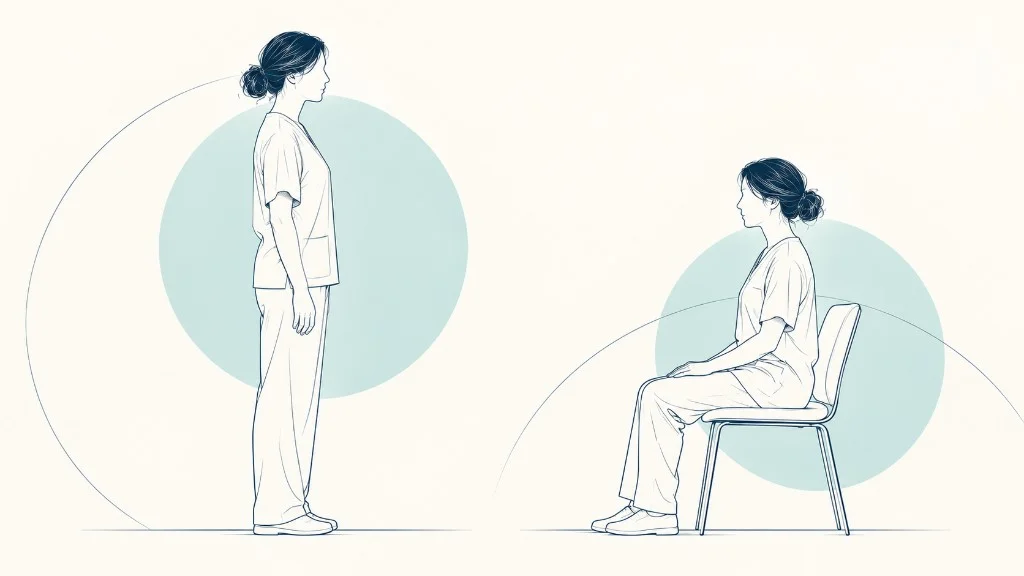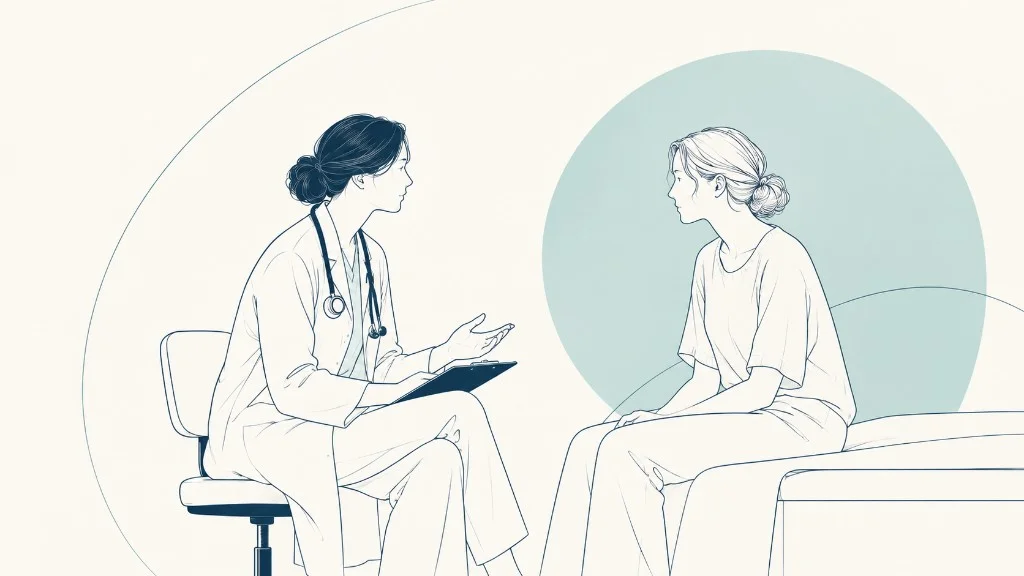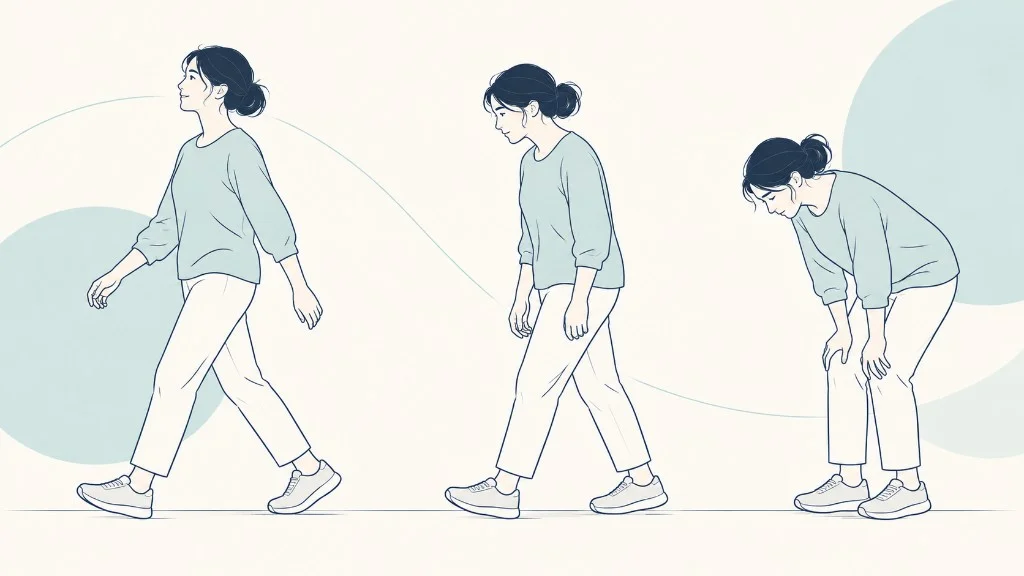
People often arrive at a clinic sure the problem is the lower back, because that is where the ache sits. Sometimes they are right. Sometimes the hip joint is the driver, and the back muscles are only tired from limping. Sometimes both are worn, which is common after midlife, and the visit has to decide which one is limiting today.
The overlap has a name in the orthopedic literature: hip-spine syndrome, the coexistence of hip and lumbar disease with symptoms that are easy to attribute to the wrong one. A review of that problem describes how pain location, the examination, imaging, and occasionally an injection are used to sort it out, because treatment aimed at the wrong joint disappoints. This article stays on that sorting. It does not repeat the general account of why position changes back pain, which is in Lower Back Pain When Standing vs. Sitting.
Why the two problems feel alike
The hip joint sits deep in the groin, but the brain does not always report pain with map-like precision. Irritation in the hip commonly hurts in the groin or the front of the thigh. It also refers into the buttock and the side of the hip.
Buttock pain is the same region people point to when a lumbar facet joint, a disc, or a compressed lumbar nerve is the source. A hand on the belt line does not identify the joint.
Walking stirs up both. An arthritic hip hurts when you load it and when you rotate it, as in getting out of a car. Symptomatic lumbar stenosis hurts as standing and walking narrow the already tight space around the nerves, then eases when you sit or lean forward.
A 2022 review in JAMA describes that stenosis pattern as back and leg pain provoked by extension and relieved by flexion. If your limit is leg heaviness that melts away in a chair, the spine is the leading suspicion. If your limit is groin pain and a limp, the hip leads. If you have both, the examination has to take them one at a time.
Age makes the overlap ordinary rather than exotic. Disc narrowing, facet arthritis, and hip arthritis all accumulate over the same decades. NIAMS notes that back pain after midlife often has more than one contributor. Finding wear in the spine does not clear the hip, and an arthritic hip on an X-ray does not mean the lumbar nerves are innocent.
Clues that lean toward the hip
None of these is a diagnosis. Together they are a reason to examine the hip before accepting a lumbar MRI as the whole story.
Where the pain starts. Pain that the person localizes to the groin, the front of the thigh, or deep in the side of the hip is more characteristic of the hip joint than of a lumbar disc. Pain that starts in the back and travels below the knee is more characteristic of a lumbar nerve. Buttock-only pain sits in the middle and should not be forced into either column.
How the hip moves. An arthritic hip often loses rotation first. Putting on a sock, cutting toenails, or sitting with the ankle on the opposite knee becomes difficult and painful. A clinician reproduces that by rotating the hip with the knee bent, while the spine is relatively still. Pain in the groin during that maneuver is a hip finding. Pain only in the back during it is less convincing.
The limp. People with a painful hip spend less time on that leg and may lean over it as they walk. The limp can ache the lower back because the trunk is working unevenly. Treating only that secondary backache, without asking why the limp started, misses the joint that is actually irritable.
Morning stiffness that frees up, then pain with use. A few minutes of stiffness that eases, followed by pain the longer you are on your feet, fits joint arthritis generally. It is not specific to the hip, but it is a different story from nerve symptoms that appear only after a predictable walking distance and then ease with sitting.
Clues that lean toward the lumbar spine
A walking limit measured in minutes, not in pivots. People with symptomatic stenosis can often tell you how far they get, down to the mailbox or the end of an aisle, and that sitting or leaning on a cart lets them go again. Hip pain is less likely to vanish completely just because you sat down, and more likely to hurt when you twist or climb.
Symptoms below the knee. Numbness, tingling, or a strip of pain running into the calf or foot fits a lumbar nerve root better than an arthritic hip. The hip can send pain into the thigh. It does not numb the top of the foot. When numbness is the main complaint, the spine-versus-hip question still matters, but the nerve has to be evaluated on its own. That situation is covered in Lower Back Pain and Leg Numbness.
Relief with flexion, pain with extension. Leaning forward to push a cart, or feeling worse when you stand tall, is the stenosis posture. It is not a classic hip sign. The reverse, pain when you bend the hip up to climb a stair, leans toward the hip or toward a lumbar structure that dislikes flexion. One posture test is not enough, which is why position patterns are clues rather than labels.
Examination findings in the leg. A dropped reflex, a weak ankle, or a sensory change in a nerve-root pattern supports a lumbar source. A hip joint does not knock out an ankle reflex.
Symptom pattern
What leans hip, what leans lumbar, what is shared
Hip arthritis and lumbar nerve pain can feel alike, and they often occur together. These clues prepare a history. They do not replace the examination.
More suggestive of the hip
- Groin or front-of-thigh pain
- Pain turning the hip, as with shoes and socks
- A limp on that leg
- Stiffness on the first steps after sitting
More suggestive of the lumbar nerves
- Heaviness or numbness that builds with walking
- Relief within minutes of sitting or leaning forward
- Symptoms below the knee
- A weak muscle or a changed reflex
Can be either, or both
- Buttock pain
- Trouble walking as far as you used to
- Arthritis on imaging of both regions
- A backache that follows a limp
Use the columns to prepare a history, not to self-diagnose. The middle column is large on purpose.
Why imaging of one region is not enough
A review of spine imaging in people without pain found disc degeneration in a large share of pain-free adults, rising sharply with age. If you image only the lumbar spine, you will often find something to blame, including in a person whose groin pain is coming from the hip. If you image only the hip, you may find joint-space narrowing and miss stenosis that is shortening the walk.
Sensible imaging follows the examination. Hip X-rays are the usual first look at the joint. Lumbar MRI is the usual look at nerves when the history suggests stenosis or a nerve root problem, not a routine reply to every backache.
Ordering both on day one is sometimes reasonable when the history is mixed. Ordering neither, and starting with a careful exam, is reasonable when the pain is mild and there are no nerve symptoms.
A diagnostic injection is a test of relevance, not a treatment plan. Anesthetic placed in the hip joint asks one question: does this pain quiet down when the hip is numb? A clear yes supports the hip as a driver.
A clear no pushes attention back to the spine or to soft tissues. A muddled afternoon proves less. Injections into the lumbar spine answer a different question and should not be described as a hip test.
When both are real
Hip-spine syndrome is not a tie to be broken by the more impressive scan. It is two diseases that can each be symptomatic. The practical approach is to treat the one that best matches the pain you are trying to change, then reassess.
If groin pain and a positive hip exam dominate, hip-directed care comes first. That may include activity changes, physical therapy aimed at the hip, medicines your own clinician considers safe, and, for arthritis that has exhausted those steps, a conversation about hip surgery. Lumbar surgery aimed at a common disc bulge will not fix a hip that hurts in the groin.
If the walking limit is leg heaviness that eases with sitting, and the hip exam is quiet, lumbar stenosis is the problem to explain and treat. We outline that condition separately in What Is Lumbar Spinal Stenosis? A hip replacement will not open a narrow spinal canal.
If both exams are abnormal, clinicians often address the clearer pain generator first and set a time to judge the result, rather than operating on both regions at once. Which operation, if any, is a later decision. It depends on how limiting each symptom is, your general health, and what has already been tried.
The questions worth writing down before that kind of visit are collected in the candidacy guide. The guide does not score you as a surgical candidate.
| Question | More often the hip | More often the lumbar spine |
|---|---|---|
| Where it hurts most | Groin, front of the thigh, or the side of the hip | Low back, with spread below the knee when a nerve is involved |
| What brings it on | Standing on that leg, stairs, pivoting, getting into a car | Walking a certain distance, standing tall, leaning back |
| What eases it | Getting off the leg. Sitting may stiffen the joint at first. | Sitting or bending forward, if the pattern is stenosis |
| What the exam emphasizes | Hip rotation, gait, and reproducing groin pain | Strength, reflexes, sensation, and walking tolerance |
What to write down before you are examined
Spend a week noticing three things. First, the spot you would put one finger, not a whole hand. Second, whether a shopping cart or a chair changes the symptom within a few minutes.
Third, whether socks, shoes, or car seats are the hard part. Add whether either leg feels numb or weak, because that detail moves the visit toward the nerves even if the hip is also arthritic.
A clinician may also watch you walk a hallway, not only test you on a table. The hallway shows a limp, a forward lean that buys walking distance, or a stop that only ends when you sit. Those are hard to fake and easy to miss in a seated interview.
If you use a shopping cart to get around a store, say that too. It is a home version of the flexion test.
Bring hip and lumbar imaging if you already have it, and say which pain you want changed. “My back hurts” is less useful than “I can walk one block before my calves burn, and sitting fixes it” or “the groin catches when I put on a shoe.” Those two sentences point to different joints. They can also both be true, which is the situation hip-spine syndrome was named to describe.
Frequently asked questions
Can hip arthritis feel exactly like low back pain?
It can feel close enough that people, and sometimes clinicians, start with the spine. Hip arthritis classically hurts in the groin or the front of the thigh, but the ache often spreads to the buttock, which most people call the lower back. A limp, trouble putting on a shoe, or stiffness when you rotate the hip inward are clues that the hip is involved. None of those clues replaces an examination, because lumbar problems can sit alongside an arthritic hip and produce their own buttock pain.
If my MRI shows disc degeneration, can I ignore the hip?
No. Disc degeneration and facet arthritis are common on lumbar MRI in adults who have no back pain at all, and they become more common with age. A report that lists those findings does not prove the spine is the source of groin or thigh pain. If walking makes you limp, or if the pain is mainly in the groin, the hip still needs to be examined. Treating a disc finding and leaving an arthritic hip unexamined is a recognized way for symptoms to persist.
What is a diagnostic hip injection?
A clinician may numb the hip joint with a local anesthetic, usually under imaging guidance, to see whether your usual pain fades for a few hours. If the pain you care about clearly improves, the hip is more likely to be a driver. If it does not change, the spine or another source deserves more attention. The test is not perfect. Pain can be hard to judge on a single day, and some people have both joints contributing, so a partial response is possible.
Does hip pain get better with sitting the way stenosis does?
Not in the same way. Symptomatic lumbar stenosis typically causes buttock or leg symptoms that build while you walk and ease within minutes of sitting or leaning forward. Hip arthritis more often hurts when you are up on the leg, when you pivot, or when you get going after sitting still. Sitting itself is not a treatment for hip arthritis, and a long car ride can leave the hip stiff. The timing of relief is one of the more useful details to describe at a visit.
Which specialist should I see first?
Many people start with a primary care clinician or a physical therapist who can examine both the hip and the lumbar spine in one visit. If the pattern is clearly groin pain and a limp, an orthopedic clinician who treats hips is a reasonable next step. If the limit is walking because of leg heaviness or numbness, a spine evaluation fits better. Seeing one does not rule out the other. Bring both the hip and the back into the history so the first plan is not aimed at the wrong joint.
Key takeaways
- Groin pain, a limp, and stiffness turning the hip point toward the hip; leg symptoms that build with walking and ease with sitting point toward the lumbar nerves.
- Buttock pain is shared territory and does not decide the source.
- Hip arthritis and lumbar degeneration often occur together, so imaging of only one region can mislead.
- An examination, and sometimes a diagnostic hip injection, is how clinicians test which joint is driving the pain you actually feel.
References
- Devin CJ, McCullough KA, Morris BJ, Yates AJ, Kang JD. Hip-spine syndrome. Journal of the American Academy of Orthopaedic Surgeons. 2012;20(7):434-442. 2012.
- Katz JN, Zimmerman ZE, Mass H, Makhni MC. Diagnosis and Management of Lumbar Spinal Stenosis: A Review. JAMA. 2022;327(17):1688-1699. 2022.
- Brinjikji W, Luetmer PH, Comstock B, et al. Systematic literature review of imaging features of spinal degeneration in asymptomatic populations. American Journal of Neuroradiology. 2015;36(4):811-816. 2015.
- Back Pain. National Institute of Arthritis and Musculoskeletal and Skin Diseases (NIAMS), National Institutes of Health.
Prepare questions for your consultation
Organize your symptoms, imaging, and treatment history into clear questions for a spine specialist. The questionnaire does not decide candidacy.