Back pain is one of the most common reasons adults seek care, and it does not spare people in their 50s, 60s, or older. What changes with age is the list of possible contributors. Discs lose some height.
Facet joints at the back of the spine develop arthritis. Muscles that hold you upright get less practice if daily life becomes more sedentary. None of that automatically means the pain has a single, fixable source.
This article is about pain that has settled in and stayed, not a strain from one weekend of lifting. It explains which age-related changes are worth knowing about, which findings on a scan are easy to over-read, and which patterns should prompt a more specific look. For how standing and sitting change symptoms, see Lower Back Pain When Standing vs. Sitting.
What “chronic” means after 50
NIAMS, part of the National Institutes of Health, describes chronic back pain as pain that lasts longer than 12 weeks and is present daily. Acute pain comes on and usually fades over days to a few weeks. Subacute pain sits in between, lasting about 4 to 12 weeks.
The labels describe time. They do not name a tissue.
After 50, chronic pain is rarely one injured part. NIAMS notes that mechanical problems, inflammatory disease, and other medical conditions can be present together, and that sometimes no single cause is identified. That is not a failure of the examination. It matches what studies of back pain have found for years: the experience of pain is real, and the structural story is often mixed.
Age also changes the stakes of a missed specific cause. A new stoop after a minor fall can be a fracture in bone that has thinned. Leg heaviness that shortens every walk can be stenosis.
Groin pain that feels like the back can be the hip. Those are different problems from a nonspecific ache, and they are the reason a long history is more useful than a one-line diagnosis of “arthritis.”
Several changes can be present at once
The parts that most often enter the conversation are ordinary pieces of spinal anatomy, described here only so the words on a report make sense.
Discs are the cushions between vertebrae. With age they hold less water and sit a little lower. A lower disc can bulge. A bulge is a change in shape, not a verdict that the disc is the pain generator.
Facet joints are small paired joints at the back of each segment. They guide motion. Arthritis there can ache, especially with long standing or leaning backward. The same position also narrows the space around nerves, so the pattern overlaps with stenosis.
Muscles and deconditioning matter as much as the joints. Holding a posture, getting out of a chair, and walking up a slight hill all ask the trunk and hip muscles to work. If those muscles fatigue early, the back aches even when the MRI looks quiet. Inactivity after a flare can make the next walk harder, which is easy to misread as the spine “getting worse.”
Bone quality becomes relevant when pain starts after a fall, a cough, or a movement that should not have been enough to injure a healthy spine. Thin bone can crack a vertebra. That pain is often midline and worse with standing. It is a reason to mention any recent trauma, steroid use, or prior fracture, not a reason to assume every ache is a fracture.
Inflammatory disease, including axial spondyloarthritis, is less common than mechanical pain but worth naming. It tends to cause marked stiffness after rest, can wake people in the second half of the night, and may start earlier than 50. It is diagnosed from a pattern plus examination and, when needed, labs or dedicated imaging, not from ordinary age-related wear.
Comparison
Aging on a scan, symptoms, and what still has to be connected
Disc narrowing, facet arthritis, and canal narrowing become more common with age. They describe structure. They do not, by themselves, name the cause of the pain.
What imaging can show
Disc narrowing, bulges, facet arthritis, and canal narrowing become more common with each decade. They describe structure.
What you feel
Aching, stiffness, pain into the buttock or leg, and how far you can walk or sit. These describe the problem in daily life.
What a clinician still matches
Location, timing, the examination, and whether a finding sits where the symptoms are. A match matters more than the longest item on the report.
The three columns are related. They are not the same measurement, and one does not replace the others.
Why a scan often cannot name the cause
A systematic review of imaging in people without back pain pooled studies of 3,110 asymptomatic adults. Disc degeneration was estimated in 37% of 20-year-olds and 96% of 80-year-olds. Disc bulges rose from about 30% to 84% across that same span. The authors’ conclusion is the practical one: many of these findings are part of normal aging and have to be read in the context of symptoms.
That does not make MRI useless after 50. It changes the question. The useful question is not “Is anything abnormal?”
Almost every report will say yes. The useful question is “Does this finding sit where the symptoms are, and would treating it change the plan?”
A report that says moderate stenosis, a disc bulge, and facet arthritis has listed three common findings. Only the history and examination can say which, if any, explains today’s limitation. Treating the most dramatic sentence on the page is how people end up discussing an operation for a finding that was never the pain source.
X-rays show alignment and bone. They do not show nerves well. They are reasonable when trauma, deformity, or a fracture is the concern. They are a weak way to explain ordinary aching.
| Finding | What it may relate to | What it does not prove |
|---|---|---|
| Disc narrowing or a bulge | Ordinary aging of the cushion between vertebrae. Sometimes associated with local backache. | That this disc is the cause of the pain, or that it needs to be removed. |
| Facet joint arthritis | Aching with long standing or leaning back. | That fusion is required. The same posture can also irritate nerves. |
| Canal narrowing | Leg heaviness or numbness that builds with walking and eases with sitting, when the exam fits. | That every person with narrowing on MRI has stenosis symptoms, or needs surgery. |
| Hip joint arthritis | Groin or thigh pain, a limp, or stiffness rotating the hip. Buttock pain can feel like the back. | That the lumbar MRI is irrelevant. The hip and the spine can both be involved. |
Patterns that deserve a more specific look
Most persistent backache is still nonspecific, meaning no single tissue has been proven to be the source. A few patterns pull the evaluation toward a named condition. They are clues, not diagnoses you can make from a paragraph.
Leg symptoms with walking. Pain, heaviness, numbness, or weakness that builds in the buttocks or legs and eases with sitting is the usual picture of symptomatic lumbar stenosis. Back pain alone is much less specific. We explain the condition in What Is Lumbar Spinal Stenosis?
Pain that is really the hip. Arthritis of the hip often hurts in the groin or the front of the thigh, but people frequently describe buttock pain as low back pain. Stiffness rotating the hip, trouble with shoes and socks, and a limp are clues. A review of hip-spine syndrome notes that the two problems often coexist and can be hard to separate. How clinicians sort them is covered in Is Your Lower Back Pain Coming From Your Spine or Your Hip?
A slip. A vertebra that has moved forward, called spondylolisthesis, is another age-related finding. Many slips are quiet. Some accompany stenosis and leg symptoms. The slip’s size on one film does not decide whether the segment is unstable or whether fusion is needed.
Pain after a low-energy injury. New midline pain after a fall, especially in someone with osteoporosis, a history of fracture, or long-term steroid use, should be assessed for a vertebral compression fracture. Waiting months because “backs always hurt at this age” can miss a treatable fracture.
Illness symptoms. Fever, unexplained weight loss, a history of cancer, or pain that is relentless at night are uncommon and should not be folded into ordinary degeneration. They need a clinician promptly, not a longer course of stretching.
What tends to help, and what a plan should not promise
For chronic low back pain, the American College of Physicians guideline recommends starting with non-drug care. Exercise, multidisciplinary rehabilitation, acupuncture, and mindfulness-based stress reduction were supported by moderate-quality evidence. Tai chi, yoga, motor control exercise, and spinal manipulation were options with lower-quality evidence.
The same guideline advises nonsteroidal anti-inflammatory drugs as the first drug class to consider if non-drug care is not enough, with tramadol or duloxetine as second-line options. Opioids are a last resort, and only after a discussion of risks. This article cannot tell you which medicine is safe for you. That depends on your kidneys, stomach, other drugs, and your own clinician.
A 2021 physical therapy guideline from the Academy of Orthopaedic Physical Therapy gives exercise training a “should use” recommendation for chronic low back pain. The list is wide on purpose: trunk strengthening and endurance, general exercise, aerobic work, and aquatic exercise. For older adults, the reviewers found strong evidence for general exercise, and they noted that the benefit tracked with enough volume and progression more than with one special exercise brand. How that looks in practice is the subject of How Physical Therapy Helps (and Doesn’t Help) Chronic Low Back Pain.
Surgery is not the next automatic step when pain has lasted past 12 weeks. NIAMS states that surgery may be discussed if other treatments have not helped, and that not everyone is a candidate even then. The operations that have a clearer role are aimed at specific structural problems, such as stenosis with limiting leg pain or a slip that is unstable, not at “cleaning up” every age-related change on an MRI.
Injections can be part of a plan for some nerve-related pain. They are not a requirement before any other care, and a short-lived response does not prove you need an operation. The candidacy questionnaire on this site is a way to organize questions before a visit. It does not decide whether an operation, or any device, is appropriate.
What to track before an appointment
A useful visit after 50 is specific. Note how long you can walk before you need to sit, whether the limit is back pain or leg symptoms, and whether leaning on a shopping cart helps. Note groin pain, a limp, or stiffness getting into a car.
List falls, prior fractures, and medicines such as steroids or blood thinners. Bring the actual imaging report if you have one, and be ready to say what you can still do on a good week.
That record does more than a pain score from 0 to 10. It tells a clinician whether the problem is nonspecific pain that should be managed with activity, or a pattern that needs a narrower diagnosis. Either way, the goal is a plan you can live with, not a promise that the MRI will be rewritten.
Expect the first plan to be adjustable. A walking program that is too ambitious will flare and get abandoned. One that never progresses will not build the capacity the physical therapy guideline is describing.
If leg symptoms, not backache, are what stop the walk, say so at the follow-up. That single detail can move the conversation from general exercise toward a stenosis evaluation, which is a different decision. Pain that is clearly in the groin, or that makes you limp, can move it toward the hip.
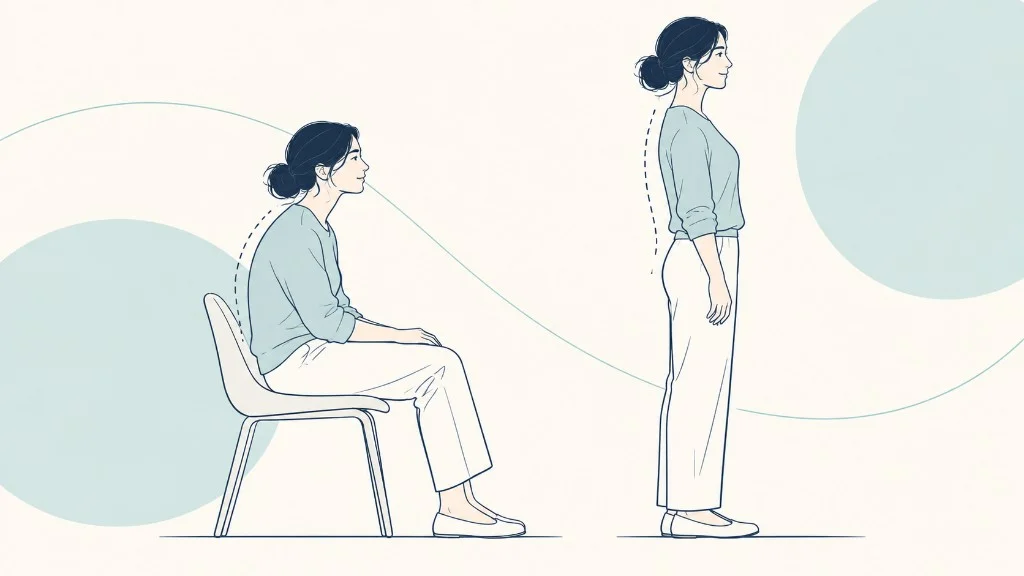
Neither shift means the original exercise was a mistake. It means the limiting symptom was specific enough to chase. Wear-and-tear findings that become more common with age are sorted in Lower Back Pain in Older Adults: Degenerative Causes Explained. Body weight and the way you stand are covered in How Weight and Posture Affect Lumbar Spine Health.
Frequently asked questions
Is chronic back pain after 50 just arthritis?
Arthritis in the discs and facet joints is common after 50, and it can contribute to pain. It is not the whole explanation for most people. Muscles, the hip, posture during long sitting or standing, sleep, mood, and general fitness all influence how much the back hurts and how far someone can walk. Two people with similar arthritis on an X-ray can have very different days. A clinician looks for a pattern that fits, rather than treating the word arthritis as the diagnosis and the plan.
Should everyone over 50 with back pain get an MRI?
No. Imaging is most useful when symptoms suggest nerve compression, when pain follows a fall or does not follow the usual course, or when a procedure is being considered. MRI also shows disc bulges and narrowing in many people who feel fine. Starting with a history and examination avoids treating a finding that is not the cause. If walking is getting shorter, a leg is weak, or bladder or bowel control changes, imaging should not be delayed for a routine waiting period.
Can chronic low back pain improve without surgery after 50?
Often, yes. For chronic low back pain without a specific surgical target, guidelines favor starting with non-drug care such as exercise. Many people become more comfortable and more active even when the MRI does not change. Improvement is usually partial and gradual rather than a cure. Surgery is considered when a clear problem, such as stenosis with limiting leg symptoms, matches the examination and has not responded to a fair trial of other care.
Why does my back hurt more some weeks than others?
Chronic pain often fluctuates. A longer walk, a poor night of sleep, a spell of inactivity, or a change in routine can raise symptoms for a few days without meaning that the spine has suddenly worsened. A steady loss of walking distance, new leg numbness, or new weakness is a different pattern and should be reported. Keeping a short note of what you can still do is more useful than grading every ache.
When is back pain after 50 an emergency?
Seek urgent care for new loss of bladder or bowel control, numbness in the saddle area between the legs, rapidly worsening weakness in the legs, or back pain with fever, unexplained weight loss, or pain after a significant fall. Those features are uncommon, but they need prompt assessment rather than a wait to see if they settle. Gradual stiffness after gardening does not fall into that group.
Key takeaways
- Chronic low back pain means pain most days for more than 12 weeks, and after 50 it usually has several contributors rather than one damaged part.
- Disc and joint changes on imaging are common in people without pain, so a scan has to be read against symptoms and the examination.
- Leg pain, a shorter walking distance, groin pain, or pain after a fall each point toward a more specific evaluation.
- Exercise is a first-line treatment for chronic low back pain; surgery is reserved for selected problems that match the symptoms.
References
- Back Pain. National Institute of Arthritis and Musculoskeletal and Skin Diseases (NIAMS), National Institutes of Health.
- Brinjikji W, Luetmer PH, Comstock B, et al. Systematic literature review of imaging features of spinal degeneration in asymptomatic populations. American Journal of Neuroradiology. 2015;36(4):811-816. 2015.
- Qaseem A, Wilt TJ, McLean RM, Forciea MA, for the Clinical Guidelines Committee of the American College of Physicians. Noninvasive Treatments for Acute, Subacute, and Chronic Low Back Pain: A Clinical Practice Guideline From the American College of Physicians. Annals of Internal Medicine. 2017;166(7):514-530. 2017.
- Devin CJ, McCullough KA, Morris BJ, Yates AJ, Kang JD. Hip-spine syndrome. Journal of the American Academy of Orthopaedic Surgeons. 2012;20(7):434-442. 2012.
- George SZ, Fritz JM, Silfies SP, et al. Interventions for the Management of Acute and Chronic Low Back Pain: Revision 2021. Journal of Orthopaedic & Sports Physical Therapy. 2021;51(11):CPG1-CPG60. 2021.
Prepare questions for your consultation
Organize your symptoms, imaging, and treatment history into clear questions for a spine specialist. The questionnaire does not decide candidacy.